By Yucel Ozdemir
Fuelled by the 2008 economic crash and gaining broader traction with the pandemic and the cost of living crisis in the wake of it, the far right and right-wing populism continues to win ground in Britain.
The reaction to failures of establishment political parties and the discontent with their austerity programmes which saw the purge of public services and falling living standards has often turned into anti-migrant and anti-refugee rhetoric by these parties and organisations.
Reform UK topped the polls for a long time until recently, and Restore, a break away from the former, is rising with 3 per cent support in July 2026. Two summers of violent attacks against migrant hotels culminated in Tommy Robinson’s Unite the Kingdom rallies which have brought together tens of thousands of people in London to blame the migrants for the country’s social issues.
While these movements gain strength, this trend has also shaped the rhetoric and the immigration policies of both Labour and the Conservative Party.
We see a similar pattern in Europe.
The following article from the Turkish journal Teori ve Eylem (Theory and Action) focuses on the example of the AfD in Germany but also presents a wider perspective regarding the rise of the far right.
—
Translated from the Turkish journal Teori ve Eylem, No. 68, Summer 2025
Economic, social, political, and military developments worldwide over the last 10-15 years, while varying from country to country, have generally led to partial changes in power relations politically. It appears this trend will continue for some time. The political balances established in Western capitalist countries after World War II, which largely persisted from the end of the Cold War until the late 1990s, have since been further disrupted by the inclusion of new far-right, populist, and racist parties and actors.
These emerging “new” far-right parties utilise or thrive on two key tactics: firstly, a reaction against the established order, and secondly, polarization. Claiming that state administration is always controlled by the same elite, and that all decisions and actions are made by them, these new right-wing movements are able to capitalise on the widespread resentment towards the existing order among broad segments of the population, exploiting economic and social problems. They either completely ignore the connection between the capitalist system and capital, which is the root cause of these problems, or they distance themselves from it. In doing so, they fuel conservative values, racism, nationalism, and hostility towards refugees and immigrants among the broad working class who see themselves as “the hosts,” thus deepening social division and polarization. They use every event and development to keep this polarization constantly alive.
They attribute economic and social problems not to the capitalist system, but to the wrong people or groups being in power. Therefore, despite the fact that these right-wing populist, nationalist, racist, and fascist groups, who claim to come from outside the “establishment” and have managed to rally broad segments of the population behind them, do not and will not pursue a fundamentally different economic policy from the established order’s monopolistic capital interests, it seems difficult for the trend to reverse quickly unless the futility of voting for them out of reaction or protest is clearly explained, especially to the working class and poor labourers.
These movements, which emerged in various European countries, particularly in the early 2000s, but initially had little presence across the continent except for the Austrian Freedom Party (FPÖ) and the French National Front (FN), rapidly gained strength, especially with the economic crisis of 2008-2009, fuelled by fear and anxiety about the future across the continent, and a nationalist discourse characterized by hostility towards immigrants and refugees. The process accelerated again in 2017 with the election of billionaire Donald Trump, who claimed to be from outside the “Establishment,” as president of the United States. With Trump’s win for a second term in the 2024 elections it seems that some of these groups will be drawn into a legitimate political arena and become partners in government. Of course, this is not happening in the same way in every country. However, common characteristics are increasingly emerging.
Furthermore, this situation is not limited to Southern and Central European countries affected by economic crises, debt crises, and refugee influxes. It has also appeared in Northern European countries. In 2022, the Sweden Democrats (Sverigedemokraterna, SD), with 20.2% of the vote, provided external support to the Conservative Party’s government, while in Finland, the far-right Finnish Party (Perussuomalaiset, PS), with 20.1% of the vote in 2023, became a coalition partner. In Denmark, parallel to the weakening of the conservative People’s Party, which had long supported the government from outside, the far-right Danish Democrats (Danmarksdemokraterne) were founded (2022) and rapidly rose with their anti-immigrant rhetoric. In their first election, they received 8.1% of the vote. In Norway, the Progressive Party (Fremskrittspartiet, FrP), with 11.6% of the vote in the 2021 elections, cooperates with the conservative government. Therefore, even the Northern European countries, once cited as examples of how “prosperity,” “democracy,” and “freedom” could exist within the capitalist system, have been affected by these developments.
This article will primarily examine the connection between the rise of the far right and economic and social problems, and the developments in Germany, Europe’s largest country, within the context of the policies pursued by capital.
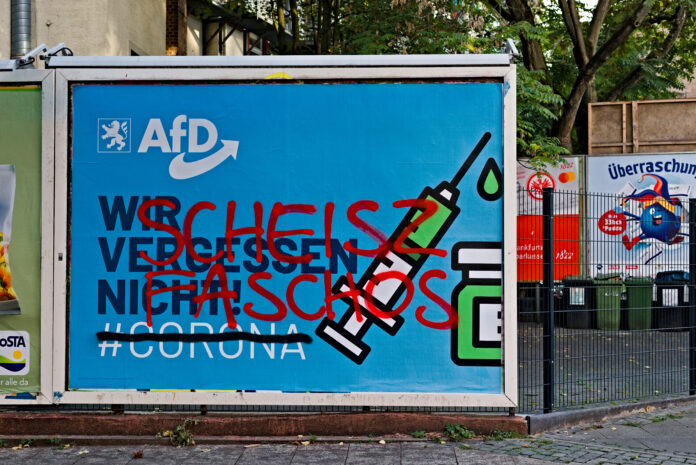
The far-right, racist Alternative for Germany (AfD) party has become a party that is constantly gaining strength due to its “fierce opposition” to the policies of the established parties. In the early elections held on February 23, 2025, it increased its vote share from 10.4% in 2021 to 20.8% – a full double. This naturally reignited the debate on how to fight or deal with this party. Using slogans like “Deutschland zuerst” (Germany First) or “Unser Land zuerst” (Our Country First), which are German versions of Trump’s “America First” slogan, the AfD’s initial stance on many issues and problems is nationalism and racism. This approach forms the basis of both its program and election campaigns, as well as the speeches of its leaders.
The period when the Christian Democratic Union (CDU/CSU) and the Social Democratic Party (SPD), considered the “main parties” of the system since the founding of the Federal Republic of Germany in 1949, began to disintegrate, also created the conditions for the emergence of the AfD as an “alternative.” The economic and social policies pursued during the social democratic Gerhard Schröder era (1998-2005), which saw the erosion of workers’ social gains, and the liberal-conservative Angela Merkel era (2005-2021), which lasted for 16 years, laid the groundwork for the far right. The last four years of the Olaf Scholz era, with its combination of economic problems and militaristic expansionist foreign policy, have brought the AfD to its peak.
In Germany, where power has constantly shifted between the Christian Democrats and the Social Democrats like a seesaw since the end of World War II, the bourgeoisie has not abandoned the parties that form its core base. It continues to support them, and if possible, help them regain strength. However, due to changing circumstances, it is not completely closing the door to the far-right, racist AfD. While direct contact or dialogue with the AfD was previously considered taboo, there has been a growing trend towards normalisation in recent years. This is because the global situation, Trump’s return to power, the AfD’s transformation into a permanent party, and the possibility of including this already established part of the system in potential coalition equations are now being discussed.
In this regard, developments in Italy are cited as an example. Following the general elections in September 2022, Fratelli de Italia (Brothers of Italy) and its leader Giorgia Meloni, having emerged victorious, normalised the Italian bourgeoisie by adhering to its domestic and international agenda, and remain in power as the leading party in the government. Meloni, previously considered “dangerous” by many European countries, is using this normalisation to both maintain her power as prime minister and continue building an authoritarian system.
Neoliberal – nationalist – conservative – racist coalition
According to official records, the AfD, founded on February 6, 2013, was established in response to the widespread fear and anxiety about the future that arose among the general population of Southern European countries during the “Euro crisis,” which followed the 2008/9 crisis, due to excessive debt. One of the party’s most prominent supporters was Olaf Henkel, former chairman of the German Employers’ Association (BDI) and owner of the Henkel monopoly, who was elected as a Member of the European Parliament for the AfD in 2013.
The AfD, starting from its anti-euro stance, advocated for the split of the Euro into North and South, or for Germany to leave the Eurozone. It also argued that Southern European countries, mired in debt crises, and Northern European countries with strong economies should use separate currencies. AfD founder and former leader Prof. Dr. Bernd Lucke, along with a group of academics, published these views under the title “Hamburg Appeal” before the 2005 general elections.
Therefore, the AfD initially attracted attention with its anti-Euro campaigns. Adding to this its rhetoric against immigration from Eastern European countries and refugees, it gradually transformed into a party positioned to the right of the existing Christian Democratic (CDU/CSU) parties, becoming increasingly entrenched. Eight months after its founding, in September 2013, it narrowly missed the 5% threshold in its first general election, remaining outside parliament with 4.7% of the vote. However, in the 2017 elections, it managed to enter the federal parliament strongly with 12.6% of the vote.
Its successes in the Federal Parliament and European Parliament (EP) elections were subsequently continued in the East German states.
However, the party split in two in July 2015 due to internal disputes. The more “nationalistic bourgeois” academics and Olaf Henkel, who were among the party’s original founders, opposed the party’s shift towards a “radical nationalist” line. At the Essen congress, this faction lost the elections and decided to leave the party. During this period, many former and current neo-Nazis actually joined the newly organized AfD, working, uniting, and becoming influential.
In a report titled “Radicalized and Established” (Radikalisiert und etabliert) for the Otto Brener Foundation, Professor Wolfgang Schroeder and Bernhard Weßels offer the following assessment of the changes that have taken place:
“At the heart of the AfD’s political line is polarization, particularly between the ‘people’ and the ‘establishment’, and between the German and the ‘non-German’ population. Here, the concept of ‘German’ is treated in an ethnic-nationalist way. Therefore, even those who later acquired German citizenship are classified as ‘not German’. Initially, the party’s main political motivation was Euro-scepticism, but in subsequent years it shifted increasingly to the right. One of the most important reasons for this was the decline of the Euro issue on the agenda. The emergence of the anti-Islamist Pegida debates from 2014 onwards and the so-called refugee crisis of 2015 are among the policies pursued. The AfD increasingly adopted a right-wing populist political strategy and thus expanded its voter potential.” [1]
Looking at what has happened since 2013, the AfD, now prioritising the national and international interests of German capital, no longer engages in the same anti-European Union (EU) and critical stance it did in its early years. In fact, its early election program for 2025 did not include leaving the EU (Dexit). The program, adopted at the party congress in Riesa in January, calls for “remigration” (reverse migration), which summarizes a fascist ideology and aims to expel immigrants, but does not mention “Dexit.” In the second part of the election program, the views previously advocating Germany’s departure from the EU are revised, stating: “Politics in Europe is moving away from democracy. The EU has become a structure where policies are shaped by bureaucrats far removed from democratic oversight. For European states to once again become beacons of freedom and democracy, the EU needs to undergo a radical reform.” [2] Furthermore, a referendum on the Euro, previously radically rejected, is proposed. The decision to return to the old Deutsche Mark is left to the people.
The general approach can be summarized as shaping the EU to serve the interests of German capital, rather than leaving it. If all of this fails, the demands are for ” Germany to leave the EU or for the European Union to be dissolved through democratic means and the European Economic Community to be re-established .” In short, leaving the EU, which was frequently mentioned in its early years, has now been relegated to the “last resort.”
The “change of opinion” on the EU is not, as some suggest, a ” चुनावी tactic.” This change is not merely a partial shift in policy that will allow the party to not only become a party that garners general discontent, but also to gain power. In other words, the AfD is aware that the path to power lies through its EU policy, which is aligned with the interests of financial capital. Its updated European policy is based on the prediction that conditions in Europe and the world will lead to a change that will make reform of the EU inevitable in the future. This change is certainly possible, but whether the process will reach that point and whether the German capital’s goal of reform in the EU will align with what the AfD envisions is still unclear. With this change, the AfD is sending a message to German financial capital that it will be flexible and compliant on the EU issue. In this respect, it is increasingly becoming part of the establishment.
Therefore, immigrants and refugees remain the most effective issue for the AfD. The propaganda waged against immigrants and refugees by the established parties and media of the regime also makes the AfD’s job much easier. These groups, repeating the same things as the AfD, have become almost a copy of the AfD in terms of nationalism when they fail to achieve the results they want.
The “polarization” policy of the AfD was a turning point in accelerating its rise to power, particularly in the context of the 2015 “refugee crisis.” Then-German Chancellor Angela Merkel opened the doors to refugees fleeing the Syrian War and heading towards Germany via Turkey and the Balkans, declaring “Wir schaffen das” (We can do it). This was commented on by Alexander Gauland, who served in various government positions for many years as a CDU member and later became the AfD’s parliamentary group leader, who stated, ” We owe our resurgence primarily to the refugee crisis. I can say that this crisis was a gift for us. It helped a lot.”
Following the “crisis” of accepting approximately one million Syrian refugees, the AfD won 12.6% of the vote nationwide in the 2017 general elections, entering the federal parliament and becoming a party represented in 14 of the 16 states. Gaining power through fear-mongering in East Germany, where there were fewer refugees and immigrants, was much faster than in the West German states. Initially, there was no widespread anti-refugee sentiment among the public; on the contrary, there was a period of immense solidarity and mutual assistance with refugees, involving over 8 million people. During this period, also called “Willkommenkultur” (Willcommenkultur), the social infrastructure to meet the multifaceted needs of a large number of refugees was not yet in place. The long-standing inadequate infrastructure, particularly in schools, was demagogically exploited by the AfD for anti-refugee sentiment. As the Merkel government’s failures in this area became more apparent, the AfD’s persuasive power and influence increased. During this period, Merkel became a direct target as the prime minister who created the problem.
The AfD’s identity as a party of capital has become more apparent
Constantly emphasizing its “conservative liberal” identity, the AfD’s approach to the economy demands more exploitation and more tax exemptions for all capital groups operating in Germany, whether German or not. For example, on page eight of the election program adopted at the Riesa congress, the party declares its support for a “social market economy.” On page nine, it states that ” corporate tax is too high according to international standards ” and promises to reduce it. A neoliberal thesis, “minimizing state intervention in the market,” is included on page ten. It also includes demands such as reopening nuclear power plants to meet the capital’s need for cheap energy and abolishing the carbon dioxide tax. Increasing the minimum wage is not included in the program. It proposes that workers should live decently with low taxes. The Austrian model [3] is proposed as a solution to poverty in retirement.
The AfD is waging war on the hard-won unemployment benefit in the same program. Those who leave their jobs voluntarily are not eligible for Unemployment Insurance. For those dismissed by their employers, it is stated that “In principle, eligibility for unemployment benefits should only be possible after three years of full employment. Unemployment support is initially limited to six months. If premiums are paid for another year for every two months, the eligibility period increases by one month. In addition, employees over 50 years of age should be eligible for unemployment benefits when they are dismissed by their employer.” [4]
Another favour granted to the wealthy is the abolition of property and inheritance taxes. Abolishing these taxes will further encourage the rich to become richer and the poor to become poorer. While withdrawal from the war organization NATO is not mentioned, there is a demand for Germany’s interests to be prioritised within NATO.
Calculations by the Leibniz-Zentrum für Europäische Wirtschaftsforschung (ZEW), based on the economic and tax promises in the parties’ programs, reveal that this racist party, which appears to be ” the voice of Germans struggling with economic problems, ” actually protects capital more radically than other parties, as evidenced by its tax proposals in its election program. The racist party does not promise a significant improvement for those with an annual gross income between €1,000 and €30,000. However, it promises an additional 6.7% to 7.7% in income through tax exemptions for those with an annual gross income above €100,000. Households earning €20,000 gross per month could receive an additional €20,000 per year. Thus, those with an annual income between €200,000 and €2 million benefit the most from the AfD’s tax plan.
The program is naturally very attractive to a significant segment of German capital and to representatives of international capital such as Elon Musk, the world’s richest man. For this reason, it is possible to say that there has been a partial shift in the attitude towards the AfD among a segment of small and medium-sized German capital groups, starting before the February 23rd elections. This shift is represented by the Axel Springer publishing house, which brings together media outlets such as Die Welt, Bild, Welt am Sonntag, and Welt TV.
Musk, who declared the AfD as “Germany’s last hope” via his social media channel X, was commissioned by the media group to write an article “to express himself.” In the article, Musk explained why the AfD is “the last hope” for Germany with the following five points: “More freedom for capital, immigration and national identity, energy independence and nuclear power, political realism, investment and future vision, and its lack of far-right leanings.”
For these reasons, the publication of direct support for a political party in the Welt am Sonntag newspaper sparked debate within the editorial board, but it did not change the outcome. The final word belonged to Mathias Döpfner, the Axel Springer manager who has long had close ties with Musk. Musk also held a live broadcast of a meeting with AfD Chancellor candidate Alice Weidel via X on January 9th to support her election campaign.
It is also a fact that certain segments of German capital are openly or secretly connected to the AfD. For example, the 83-year-old owner of Müllermilch, whose turnover reached 7 billion euros in 2021, Theo Müller, has been known for his closeness to the far right since the 1980s. Müller, who met with AfD co-chair Alice Weidel at a luxury restaurant in Cannes, told the Handelsblatt newspaper that he received information from Weidel about the AfD’s program and personal views. Defending Weidel, Müller stated that ” she has no connection whatsoever to Nazi ideology, ” adding that he has never donated to the AfD, that the meeting was private, and that he would meet with Weidel again in the future. Following this meeting, Handelsblatt sent a catalogue of questions to the chairpersons of the boards of directors of 40 companies to gather their opinions on the AfD. According to the newspaper, five of these companies answered all the questions, while only two expressed opposition to the AfD. None of the country’s large family businesses responded to the questions. This can be interpreted as capital avoiding taking an open stance due to commercial concerns. German capital, which thrives on foreign trade and foreign investment, opposes the far right because it believes its rise to power could damage the country’s image. At the beginning of 2024, many corporations, including VW, Bosch, and Mercedes, supported workers’ opposition to the far right, and some executives even participated in the protests. In an interview with the Süddeutsche Zeitung newspaper, Christian Kullmann, CEO of the chemical company Evonik, took a stand against the AfD and called on companies to adopt an open and honest stance.
It can be said that the German monopolistic bourgeoisie, which operates in global markets, is involved in foreign investments, or is part of international capital, is not inclined to abandon the old system parties anytime soon, given the circumstances.
What the 2025 general elections showed
Seen as the primary culprits for the worsening economy and high cost of living (the ruling coalition partners SPD, Greens, and FDP, who collectively lost 19.4% of the vote), coupled with increasing societal polarization, the Ukraine war, political support from the US, terrorist attacks in cities like Magdeburg, Aschaffenburg, and Munich, and the hostility towards immigrants and refugees perpetuated by all parties and the media of capital, the AfD achieved a historic record of 20.8% of the vote in the early general elections held on February 23rd, sending 152 representatives to parliament. Polls had indicated a vote share in the 22–24% range. Post-election polls have shown similar figures again. This marks the first time since the fall of Hitler’s fascism that a far-right, racist party has such strong representation in parliament.
In the autumn of 2024, the AfD, which received around 30% of the vote in the East German states of Saxony, Thuringia, and Brandenburg, appeared in polls to be poised for a significant surge in the general election. This was because fears and anxieties about the country’s future, coupled with the failures of the ruling SPD-Greens-FDP coalition government in both domestic and foreign policy, had created the conditions for the AfD to gain strength. Therefore, the increase in their vote share from 10.4% in 2021 to 20.8% was not entirely surprising.
In post-election polls, when asked ” What issues influenced your vote? “, ” internal security ” and ” social security ” each received 18% of the votes, placing them in first place. ” Internal security ” primarily refers to measures taken against the terrorist attacks that have occurred within the country in recent months. It should be noted that the series of terrorist attacks that occurred before the general elections ceased abruptly afterward. Whether certain intelligence and security units within the state were behind these attacks to help the AfD rise remains a question mark today. However, the increase in terrorist attacks before the elections is likely not a coincidence.
These two issues were followed by ” migration ” and ” economic growth ” with 15% each. The rising cost of living was somewhat relegated to the background. Other parties, in a manner no less significant than the AfD, exploited the issues of “internal security” and “migration.” This was one of the main reasons why the AfD increased its vote share so considerably.
According to analyses, a large portion of the public stated that their economic situation had worsened significantly compared to the previous period, and they voted for the AfD out of resentment towards the governing parties. The proportion of workers among these voters has increased considerably compared to the past. According to exit polls, as the SPD, once the party with the most workers’ votes, lost ground, the far-right party began to gain strength. The AfD, which received only 6% of the workers’ vote in its first election in 2013, increased this figure to 21% in the September 2021 elections and to 38% in the February 2025 elections. This shows that the increasing anxiety about the future among German workers and labourers played a major role in the rise of the AfD. The SPD, which received 27% of the workers’ vote in 2013, saw its vote share drop to 12% in the February 2025 elections.
A similar picture emerged in the June 2024 European Parliament elections, where the AfD, the second-largest party with 15.9% of the vote, received support from trade union members. According to data published by the German Trade Union Confederation (DGB), 18.5% of those who voted for the far-right AfD in the EP elections were trade union members. The fact that the percentage of trade union members voting for the AfD was above average is noteworthy. The so-called Social Democratic Party (SPD), which has a significant influence on trade unions, received 18.1% of the vote from trade union members in the same elections. The SPD’s nationwide vote was 13.9%. The percentage of trade union members voting for the conservative CDU/CSU was 24.8%. Overall, it appears that trade union members voted most heavily for right-wing parties.
Another important piece of data regarding the European Parliament elections was published by the research company “infratest dimap”. In response to the question “ Who is voting for the AfD? ”, workers were clearly ahead with 33%. Moreover, this rate was a 10% increase compared to the 2019 elections. Other occupational groups from which the AfD received votes included civil servants at 15%, self-employed individuals at 17%, and pensioners at 11%.
According to the same data, the SPD received 12% of the vote from workers, the conservative Union parties (CDU/CSU) 24%, the Left Party (Die Linke) 3%, the Greens 6%, and the Sahra Wagenknecht Alliance (BSW) 6%. Compared to the February 2025 elections, this 5% increase over approximately six months provides insight into how quickly workers are breaking away from traditional capitalist parties and turning to the AfD.
Another decisive factor in the 2025 general elections was the preference of young people. While in previous elections they mostly voted for the Greens and the liberal FDP (which failed to reach the electoral threshold), this time young people chose the Left Party as their primary option. Particularly after the CDU/CSU, along with the AfD and BSW, attempted to pass an anti-immigrant law through parliament on January 31, 2025, large anti-fascist demonstrations, largely led by young people, erupted in all cities. During this period, the Left Party’s vote share increased. Young people not only participated in the demonstrations but also actively took part in the Left Party’s campaign against the far-right threat. As a result, the Left Party’s vote share quickly increased, and it entered parliament with 8.8%. It also managed to win direct candidacies in 7 constituencies. According to exit polls, 25% of voters aged 18-24 voted for the Left Party, while 20% voted for the AfD. In previous elections, the Greens, who received the most votes from young people, managed to get 12%, while the FDP received 6%.
Another reason for the rapid rise of the Left Party (Die Linke) was its focus on social issues rather than immigration and refugees. High cost of living, high rents, and low wages were brought to the forefront. Considering the disintegration of the SPD and the pro-capitalist stance of the far right, the Left Party could increase its vote share due to growing social problems. However, its ideological line, its significant efforts to become part of the system, and its role as a coalition partner in the states have distanced the Left Party from its identity as a “protest” party for quite some time. For these reasons, it fell below the 5% threshold in the 2021 elections. However, the fact that it gained 55,000 new members between the beginning of 2025 and mid-May will determine whether this party can become a destination for disaffected voters—particularly young people in West Germany—in the coming period.
The fact that the far-right, racist party received its highest vote share since World War II is a significant problem in itself. Another reason for its gains is that it received the most votes from a group of voters who had not previously voted. The February 23rd elections showed that the AfD was the recipient of “protest votes.” According to polls published after the election, approximately 1.8 million of the 10,327,148 votes received by the AfD came from voters who had not previously gone to the polls. The high voter turnout primarily benefited the AfD.
Another important fact revealed by the elections is that the AfD is becoming increasingly unrivalled in the East German states. The party won almost all the constituencies in these states. While its nationwide vote share was 20.8%, its average vote in the East German states was recorded as 32%. The Sahra Wagenknecht Alliance (BSW), expected to rival the AfD in East Germany, failed to gain seats in parliament with 4.97% of the vote, while its average vote in the East German states was almost double: 9.3%.
Following the election results, the CDU/CSU-SPD coalition formed under Prime Minister Friedrich Merz will also be unable to solve the existing problems. On the contrary, the coalition agreement shows that it plans to take steps that will deepen them. It appears that the SPD, having suffered a heavy defeat in the election, will continue to lose votes. Military spending and a militaristic foreign policy, as desired by capital, will accelerate. Therefore, in the coming period, contradictions will continue to deepen much more rapidly than before. The AfD, still maintaining its character as a “protest party,” may continue to be the focal point for defections, especially from the conservative CDU/CSU.
In the last elections, the AfD received one million votes from the CDU, approximately 900,000 from the neoliberal FDP (which failed to cross the threshold), 720,000 from the SPD, 110,000 from the Left Party, and 100,000 from the Greens. The AfD only lost 60,000 votes to BSW. The Left Party, which made a surprise breakthrough in the elections, received approximately 300,000 votes from voters who had not previously voted, while receiving the most votes from the Greens (700,000), the SPD (560,000), the FDP (100,000), and the CDU (70,000). These figures themselves show that the Left Party is far from winning the votes of workers and “protest votes.” It appears to have received more votes from the Greens and the SPD, who have abandoned their “humanist” stance on immigration and refugees.
Another indicator that the AfD is still a “protest party” is its membership numbers. While it experienced growth from 17,687 to 34,000 members between 2013 and 2019, this number dropped to 30,000 by the end of 2021, before rising again to 39,596 in 2023. Despite this, the AfD has the fewest members among the parties represented in parliament. Furthermore, the AfD can be described as a typical “right-wing populist male party.” Women make up only 17% of its members.
The ground enabling the AfD to gain strength must be eliminated
The fact that the AfD’s demands are being turned into legislation, and the debate within parliament about how to deal with the AfD, is one of the reasons for the AfD’s growing power. The AfD has tried, and will continue to try, to gain more power by playing the “victim” in this debate. It seems that when parliament begins its work, AfD members will bring this up even more, continuing to claim they have been victimized by other parties.
Of course, the main reason for the AfD’s rise in power is not its “playing the victim.” This is the fundamental point where Spahn and others are mistaken or distorting the truth. The real reason is the existing economic and social problems in the country and the lack of an understanding or program from other established parties to solve these problems; moreover, the nationalist, far-right rhetoric that fuels the AfD is being used by other capitalist parties and the mainstream media. Post-election polls showed that social security, anxieties about the future, and the high cost of living were decisive factors in voting preferences. Hostility towards immigrants and refugees also gained traction as a result. Therefore, the parties responsible for the economic and social problems have no logical basis for complaining about the AfD, and it seems unlikely that they will be able to prevent the AfD from gaining power. The fact that the Christian Democrats are the major partner in the coalition and that, as seen in the government agreement, the problems will continue to deepen also makes things easier for the AfD in the coming period.
Aware of this, the ultra-conservative wing of the CDU/CSU is calculating how to normalise the AfD, thereby weakening it on the one hand, and on the other hand, turning it into a “partner,” starting at the local and state levels. One wing of German capital, represented by the Bild newspaper, has long advocated for the normalisation of the AfD, arguing that it is “a reality of the country.” Another wing wants it weakened without normalisation. The report prepared by the Federal Office for the Protection of the Constitution (BfV), which identifies the AfD as “definitely far-right,” can be read as a reflection of the policies pursued by these groups.
It could be argued that the AfD, like other parties, is a truly normal party within the system in terms of defending the interests of capital against the working class. What sets it apart is its radical, racist rhetoric, particularly regarding refugees and immigrants, and its status as a “protest” party. The presence of a significant number of fascists within its ranks is another distinguishing feature.
Unless the AfD is exposed and revealed, starting from within parliament, as an enemy not only of immigrants but also of German workers and labourers, and unless an understanding of the struggle against racism is developed among the public, it seems that all the discussions will continue to benefit the racist party.
For all these reasons, we need to review what is happening once again and develop a discourse and action that will affect broad segments of the population. This need requires a programmatic, ideological, and political struggle against the AfD, not a superficial one. The millions of workers, labourers, and young people who vote for this racist party can only be won over if the fact that the AfD has become a new alternative for capital is explained to them. Because the fact that the real culprits are not immigration and immigrants, but capitalism and the capital and parties that sustain it, is covered up by intense propaganda, this party is able to hide its true face.
Conclusion
As can be seen in the example of Germany, the deepening contradictions and problems between labour and capital in the capitalist-imperialist system have led to a loss of trust among the broad masses of the people for the old order parties. A significant portion of these parties, which are extremely worn down and undergoing a process of partial disintegration, are trying to prevent the rise of the so-called far right by shifting towards a more nationalist, chauvinist, anti-immigrant and anti-refugee line. [5] However, they have not been successful in this. Imperialist competition, the struggle for market share, war and the needs of capital in terms of armament also show that their recovery will be difficult in the short term. Because the needs of capital require them to implement more anti-labour policies. The weariness of the traditional order parties and the detachment of the masses from these parties have, at this stage, given rise to new political actors embodied in far-right, populist parties. Since the economic policies pursued by these new order parties are extremely neoliberal, they represent new opportunities rather than problems for capital. The only apparent problem is that some of these parties seem closer to Russia and China in the imperialist polarization. However, this “closeness” is relative, and these countries are not satellites of each other. Nor can it be said that the level of closeness is the same for all of them. Fratelli de Italia is aligned with the US, EU, and NATO. With Trump’s re-election in the US, the process of consolidating power has accelerated, and their alignment with the US axis has increased. Trump and his team’s efforts to redesign Europe according to US interests through these parties are also among the things expected in the near future.
It can be said that the rise of the far right does not pose a major problem for capital, depending on the specifics of each country. Historically, Germany appears to have a significant difference and distinctiveness. As long as the established parties remain and collectively hold a majority in parliament, the main trend seems to be against allowing the far right to govern or become a partner in the government. The primary concern of this trend is that the further consolidation of power by the far right could harm the international interests of German capital. However, this is not immutable. Emerging trends are not absolutely opposed to the far right being in positions of power when necessary and when conditions allow. A similar trend can be observed in France.
Therefore, the conditions are ripe for some of the far-right parties currently in power or as coalition partners to lose power within a few years by transforming into traditional establishment parties. Some of these parties may shift towards a more fascist line, while more fascist organisations may emerge from others.
Reclaiming the workers and labourers who have broken away from established parties and joined far-right parties, and organizing them into anti-capitalist struggle alliances, could reverse the current trend. However, the number of revolutionary parties and organisations capable of attracting the attention of the working class is still very limited. Changing this unfortunate historical trajectory is only possible by building new, powerful revolutionary and communist parties. Broad-based anti-fascist and anti-racist fronts, tailored to the historical specificities of each country, can move forward by putting forward solutions to existing economic and social problems. As the direct link between social problems and the rise of the far right, racism, and nationalism becomes apparent, and as it is demonstrated that the far right is not an alternative to the old established parties, the anti-capitalist character of the anti-fascist front may become more attractive to broad masses. This will naturally create the conditions for it to express itself as a political platform. If the economic and social problems of the working class are prioritised, workers and labourers who are currently turning to the far right due to a lack of alternatives can be quickly won over.
The economic and political spiral the world is in, the increasing contradictions of the imperialist-capitalist system, and consequently the working class’s tendency to break away from the established parties, present new tasks and opportunities in the struggle against capitalism. If these opportunities are properly assessed, strong communist workers’ parties can re-emerge.
[1] Schroeder, W. und Weßels, B. (2023) “Radikalisiert und etabliert,” www.otto-brenner-stiftung.de/afd-radikalisiert-und-etabliert/
[2] AfD 2025 Election Programme (Programm für Deutschland), afd.de/wp-content/uploads/2025/02/AfD_Bundestagswahlprogramm2025_web.pdf
[3] The Austrian pension system is one that finances pensions through contributions from those who are already working. The contribution rate has been 22.8% since 1988, with both employers and employees each paying a share. This is a higher rate than in Germany. While the standard retirement age is 65, women were able to retire at 60 until 2023. Pensions are also higher than in Germany. There is a minimum pension that has been increased to €1,656.05 for singles and €2,235.34 for couples with 40 years of insurance.
[4] AfD 2025 Election Programme, p. 22.
[5] Of course, the sole reason for this shift is not to prevent the rise of the far right. The interests of the class they represent politically and ideologically also require it. They aim to defend the national market and interests in global competition.