By Kansu Yildirim
Translated from Turkish. First published in the daily newspaper Evrensel. June 14, 2026
The capitalist world system has always been a place of inequality and injustice. But the term “inequality” is no longer sufficient to describe the widening gap in income and wealth distribution between individuals and countries observed in recent years. While the personal wealth of the super-rich has reached gigantic proportions and is shaking macroeconomic benchmarks, their share of global wealth now corresponds to the combined wealth of billions of people. As the plight of the masses, trapped in a vortex of hyper-exploitation and hyper-inequality, continues to worsen, global wealth is becoming increasingly concentrated in the hands of a minority. This situation is also structurally altering the economic parameters that have prevailed since the 1920s.
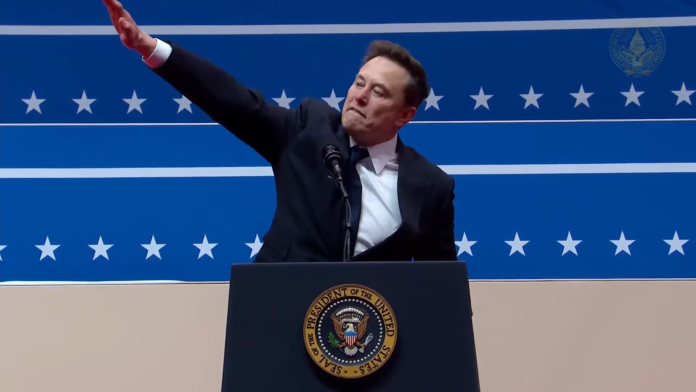
Forbes data from March 2026 shows that at the top of global wealth concentration stands none other than Elon Musk. Musk’s fortune is three times the combined wealth of his closest rivals, Larry Page and Sergey Brin. To understand the dynamics of this wealth concentration, a historical comparison is illuminating: When John D. Rockefeller, the first dollar billionaire in history, died in 1916, his fortune was equivalent to 1.5 percent of the US gross domestic product (GDP). Musk’s fortune, now considered the first dollar trillionaire, is equivalent to 3 percent of US GDP—exactly double the historical value achieved by Rockefeller.
The nature of Musk’s techno-oligarchic empire exhibits an ownership structure that differs from the traditional, diversified investment portfolios of the bourgeoisie. His personal wealth is concentrated directly in shares of companies like SpaceX and Tesla, which he founded and leads. However, this ownership structure does not mean that the wealth in question is independent of the speculative dynamics of the age of financialization. The market valuations that enabled him to surpass the trillion-dollar mark are essentially fictitious capital derivatives based on stock market speculation and future earnings expectations. In times when global financial liquidity shrinks or expectations in the technology sector falter, there is a risk that these speculative values, too, could rapidly evaporate. Musk’s wealth is thus a hybrid mix of traditional forms of ownership, which are directly based on the exploitation of labor, and the fictitious nature of financial markets.
Recent analyses by corporate strategists compare the position of Musk’s company SpaceX to that of the East India Company, which controlled global trade routes by military force in the 17th and 18th centuries. SpaceX is more than just a commercial company that manufactures rockets: with Starlink, which forms the communications infrastructure in orbit, it has taken control of the space transportation network, thereby creating a strategic monopoly. As its share of commercial and military cargo transport into Earth orbit is projected to increase from about 10 percent in the 2010s to an estimated 80 percent in the 2020s, the company has achieved a leading monopoly in the transportation and communications sector.
The comparison with the East India Company becomes particularly relevant here. Just as the company, backed by the power and army of the British monarchy, operated like a state institution, so too are the monopolies of the modern techno-oligarchy, which have achieved a supranational capital position, not independent and free powers. SpaceX and similar structures consolidate their monopolistic position by profiting from the Pentagon’s multi-billion-dollar military contracts, NASA’s technology and knowledge transfer, government subsidies, and legal loopholes. In their global operations, they operate under the protection of a hegemonic state power.
At this point, one should not assume that nation-states have become passive or subservient to technological powers, but rather consider the strategic cooperation and co-production relationships between the central capitalist states and the companies of the techno-oligarchy. On one side of this relationship are the policies of states striving for hegemony within the imperialist system, aimed at controlling military and technological resources; on the other side is the plan to unlock vast profit potential by creating large domestic and foreign markets. As Özgür Orhangazi points out, the fact that, following financialization, the ability of technology companies to generate and appropriate returns has increased has significantly amplified the weight and power of returns within the capitalist system: “The significant changes brought about by digital monopolies do not show that capitalism is over, but rather that it has evolved into an even more intense form of monopolistic rentier capitalism.” This is a factor that accelerates the concentration and transfer of wealth.
The fact that capital has reached hundreds of billions of dollars in so many regions of the world within such short periods cannot be explained by clichéd “success stories.” Behind this extreme inequality lies the global financial structure resulting from the role of the US dollar as the global reserve currency. Dollar hegemony and its associated financial mechanisms (SWIFT, IMF, and the structure linked to the World Bank) are legal and institutional mechanisms that enable and secure the flow of wealth and income from the Global South to the Global North. It is precisely for this reason that the stock market valuation that made Musk a trillionaire is not independent of the privileged position afforded by the US-centric system of dollar hegemony. The focus of global capital flows and savings on US financial assets creates a structural foundation that drives up the value of indices like the S&P 500 and, consequently, the market capitalization of these companies. One consequence of this is the global transfer of resources.
According to an Oxfam report, the wealthiest 1% of the population in countries of the Global North, such as the US, UK, and France, earned $30 million per hour from countries of the Global South through the financial system in 2023. While the countries of the Global North represent only 21% of the world’s population, they are home to over 69% of global wealth, 77% of the wealth of billionaires and trillionaires – including Musk – and 68% of all billionaires.
According to calculations by the World Inequality Database (WID), an amount almost three times the global amount of development aid—roughly 1 percent of global GDP—flows annually from poor to rich countries in the form of net income transfers. While low- and middle-income countries spend an average of about half of their government budgets on debt repayment, a large portion of these payments goes to wealthy financial actors and creditors based in New York and London. Data from Global Financial Integrity also shows that illicit financial flows from developing countries largely end up in banks in industrialized nations such as the US, the UK, and Switzerland, or in tax havens like the British Virgin Islands and Singapore.
While the wealthy in the Global North are concentrated in the top global income bracket, the upper income groups in the Global South are also – albeit to a lesser extent – part of the same global hierarchy:
- While the richest 10 percent of the world’s population own 75 percent of global wealth, the poorest half of the population owns only 2 percent of the wealth!
- The richest 0.001 percent of the world’s population – that’s about 60,000 people out of a world population of 8.3 billion – own three times as much wealth as the poorest 50 percent combined!
- In almost every region of the world, the richest 1 percent alone own more wealth than the poorest 90 percent combined!
The most recent dynamic driving the pace of wealth concentration in today’s global system is the wave of investment in artificial intelligence that has swept through financial markets. As Michael Roberts points out, financial markets have essentially become “one big bet on the US economy.” Capital investments by tech giants like Microsoft, Alphabet, Amazon, and Meta in AI infrastructure and data centers have historically surpassed both the 19th-century railroad craze and the peak of the dot-com era.
This corporate growth, however, is based on a circular and fragile financing model. The fact that roughly 40 percent of the S&P 500’s market capitalization and 80 percent of US corporate earnings growth are attributable to a handful of AI-related stocks (primarily Nvidia and the hyperscalers) makes the financial structure vulnerable and increases risks. Companies boosting their profits through cross-investment (“circular financing”) and stock market speculation is a phenomenon that points to the limits of fictitious capital. This technology bubble, inflated not by real production and profit growth but by financial operations, is likely to burst like previous bubbles.
While structural risks and vulnerabilities persist, the dollar billionaires, most of whom operate in the technology sector, now possess wealth exceeding the GDP of many countries. Furthermore, they play a crucial role in the global mobilization and distribution of resources, as well as in the transfer of technology, wealth, and income.
This historically unprecedented concentration of capital is not a phenomenon of recent years; rather, it is the current stage in an imperialist chain of resource redistribution that has persisted since colonial times and is underpinned by financial and military coercion. It is the imperialist world system itself, inflated by fictitious capital bubbles, that concentrates the wealth of billions of people and the Global South in the core capitalist countries and seeks to seize control of the military and security technology sector, which has made Musk a billionaire. It is futile to understand this wealth and this extreme inequality without addressing imperialism and exploitation.
The combined wealth of the 20 largest billionaires (USD 3.8 trillion) exceeds the GDP of most countries in the world.
| Name | Net worth [USD] | Country | Company | Equivalent to the GDP of the countries… | |
|---|---|---|---|---|---|
| 1 | Elon Musk | 1.1 trillion | USA | Tesla, SpaceX | Poland, Sweden, Belgium, Argentina and 150+ countries |
| 2 | Larry Page | 257 billion | USA | Google/Alphabet | Finland, Vietnam, Romania and 120+ countries |
| 3 | Sergey Brin | 237 billion | USA | Google/Alphabet | Greece, Portugal and 115+ countries |
| 4 | Jeff Bezos | 224 billion | USA | Amazon | New Zealand, Kazakhstan and 110+ countries |
| 5 | Mark Zuckerberg | 222 billion | USA | Meta | Cuba, Ethiopia and 110+ countries |
| 6 | Larry Ellison | 190 billion | USA | Oracle | Ukraine, Kenya and 105+ countries |
| 7 | Bernard Arnault | 171 billion | France | LVMH | Slovenia, Bulgaria and 100+ countries |
| 8 | Jensen Huang | 154 billion | USA | NVIDIA | Ghana, Tanzania and 95+ countries |
| 9 | Warren Buffett | 149 billion | USA | Berkshire Hathaway | Ecuador, Uzbekistan and 95+ countries |
| 10 | Amancio Ortega | 148 billion | Spain | Zara/Inditex | Angola, Sri Lanka and 93+ countries |
Important note: The comparison contrasts an asset base with an annual GDP flow and should therefore be understood more as a comparison of sizes than as a direct ratio calculation.