Communist Platform – Organisation for the Communist Party of the Proletariat of Italy
This article was originally published in Unity & Struggle, No. 51, November 2025
Italy’s position in the Atlantic field
Since the Anglo-American landing in July 1943, during the Second World War, US imperialism has been especially attracted to the position of Italy, considered a “key country” in which to remain, establishing its own bases there and subjecting it to its anti-communist and hegemonic plans.
The United States of America has always considered our country one of the fundamental pillars for maintaining its dominance in Europe, since it is a “collaborating country” ready to support its foreign policy, as well as a geostrategic platform that allows it to easily and quickly reach areas where enormous economic. energy, political and strategic interests are at stake.
Because of this special position, Italy is home to the most complete military arsenal that the United States has outside its territory, including some 90 nuclear bombs (50 in Aviano and 40 in Ghedi), which exposes our country to terrible risks.
For the past decades, U.S. imperialism has kept a tight grip on Italy through overt (Marshall Plan) and covert economic financing, political interference, cultural conditioning, and secret activities, which have allowed its strategic interests to continue and prevented the change of the political order of Italy, long considered a “border country” (both external and internal) in the struggle against the Soviet Union and the communist and worker’ movement..
From the post-war period to the present day, Italian political and social life has been characterized by the presence, continuous interference and heavy intervention of US imperialism, with the support of the ruling class. This has made Italy a country with very limited sovereignty (in which a republican regime of formal and limited constitutional democracy masks a substantially dictatorial, bourgeois, anti-worker and anti-communist regime), conditioning the domestic political landscape and foreign policy decisions, subordinating them to the political-military strategy followed by the Pentagon and the CIA.
This has happened with the complicity of the anti-communist power bloc comprising: the Catholic, liberal, reactionary and reformist political forces, the large state apparatuses (civil and military, overt and covert), the main industrial and financial groups, the mainstream media, the fascists and separatist forces, freemasonry, the leaders of the collaborationist unions, the Vatican and the reactionary priests, the mafia and other criminal organizations.
Membership of NATO, an organization of war and terror
Italy’s entry into NATO, which was founded in April 1949, accompanied by the reinforcement of the armed forces and the establishment of secret networks for the “unorthodox war” against communism (Gladio and other “stay behind” structures), was the hallmark of this particular condition.
All the governments of republican Italy and the parties that supported them, while with one hand they swore (formal) respect for the Constitution, with the other they contributed, at different levels, to the realization of the strategic objectives decided by the United States in order to win the “cold war” by all means and maintain its position as a hegemonic power.
Membership of NATO and the presence of the US military apparatus in our country has so far been an “unchangeable and indisputable” fact for the ruling class and its various political forces.
This has allowed the US/NATO military contingent to make extensive use of our territory (seriously contaminating it, such as in the military operations in Sardinia), to establish military bases and centres to impose its control over the Mediterranean and to carry out its military activity in North Africa and the Middle East, as well as to create a rear base and a launching pad for operations in Eastern Europe: from the Balkans (remember the war waged by NATO in Yugoslavia) to Ukraine.
A constant in Italian politics
A constant feature of bourgeois policy in Italy from the post-war period to the present day has been the particular application of the general U.S. strategy, which has provided itself with “special” means for its management and realization.
Among these means are the strategy of tension, coup plots, psychological warfare, criminal trafficking, terrorist operations against the labour and trade union movement, against revolutionary and youth protest movements, against popular activism, with the aim of reactionary destabilization/stabilization.
The direction of these manifold activities has always been in the hands of the U.S./NATO command centres, in cooperation with the Italian ruling class and state apparatuses.
To carry out this plan, it is essential to ensure the maintenance of U.S./NATO bases and US access to Italian territory, ports and airspace; the deployment of tactical and strategic missiles; the acquisition of increasingly sophisticated war machinery and the increase in military budgets; the confidentiality of “classified” information; the control over the special State apparatus; the willingness to participate in military and psychological operations, etc., avoiding any rifts or rupture within the NATO sphere.
For these reasons, the parties and elements that did not fully guarantee U.S. “security” interests were prevented from coming to power (especially in key ministries), especially with regard to compliance with U.S. directives on conventional and nuclear military matters.
The Italian bourgeoisie as a “client” of the United States
To be sure, one cannot speak of an alliance (on equal terms) between the United States and Italy; nor can we conceive of this relationship in terms of simple vassalage. In fact, the Italian bourgeoisie has been subordinate to the U.S. superpower, in its cover-ups and misleadership, etc., not only a way of reaffirming its Atlantic loyalty, but also a way to defend its class interests and privileges, to pursue its imperialist ambitions in an area riddled with numerous conflicts, to take advantage of its position and to maximize the “return” on U.S. financing. to preserve the system of exploitation and its oppressive institutions, to stabilize the political situation and block the revolutionary process.
Evidence of this relationship of “active” subordination, in which the ruling class has reserved for itself limited space, are the numerous military missions abroad (some 50, including outside the scope of NATO), the specific ambitions of Italian imperialism in Libya and other African countries, in the Balkans, in the “wider Mediterranean”, as well as the role it plays at the European level and in the production and sale of weapons and military systems at the international level. All these activities are always done in accord with the restrictions imposed by the U.S.
Of course, there are common interests of the Western NATO bloc, which maintains a military presence in strategic positions such as the Red Sea and the Middle East, supporting pro-Western and reactionary regimes, such as Al Sisi’s in Egypt.
On the other hand, the motivation for the careful and incessant control exercised by the United States over the Italian bourgeoisie must be sought in the need to keep our country within its sphere of influence and to ensure the full availability of the Italian “satellite” – a country crucial for the control and stability of the Mediterranean and European area and, at the same time, the most delicate point of the Atlantic alignment—for U.S. programs and operations.
Following the collapse of the revisionist Soviet Union, there was a downgrading of Italy’s geo-strategic importance. However, the fundamental interest of the United States in our country has never diminished and has been renewed. This has materialized in the strengthening of NATO’s southern flank and in challenging rival countries, especially China and Russia, in order to hinder and weaken them in the struggle for global hegemony (for example, refusal to participate in the New Silk Road and participation in Euro-Atlantic response initiatives, its presence in the Mediterranean and the Indo-Pacific, etc.). But also to act as a “Trojan horse” in the E.U. in order to anchor it to the United States and keep imperialist Germany in check.
The continuous increase in military expenditures
With the sharpening of the inter-imperialist contradictions, the increase in military expenditures in the E.U. and in our country began, which has seen a continuous acceleration. With Meloni’s government, it went from €24 billion in 2022 to €32 billion in 2024 (fifth place among NATO countries, twelfth worldwide). By 2025, reaching 2% of GDP, military spending will be about 42 € billion. This means significant cuts in services such as public health, transport, education and scientific research.
The rearmament process has advanced rapidly in recent years, with several programs having been affected:
• The Army, with the program to reinforce the tracked armoured forces: 280 new Panther heavy tanks and more than a thousand Lynx light tanks will be added to the 125 Ariete heavy tanks in the phase of modernization. About 150 new Rch155 self-propelled howitzers are being prepared, which will be added to the 70 modernized Pzh2000. The fleet of wheeled trolleys has also been reinforced with 150 Centauro 2 and 76 Freccia Plus, in addition to the 250 already in service. The fleet of combat helicopters has also been renewed with a hundred new Aw249 combat aircraft and Aw169 multiroles. Six new batteries of Samp/t anti-aircraft missiles and about twenty Himars rocket launchers are also on the way, in addition to a massive supply of 155 mm artillery shells.
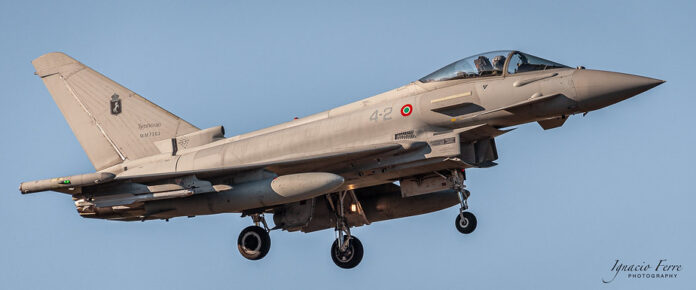
• The Air Force: Eurofighter program, with the order for another 24 Typhoon fighters (7,500 million) that will be added to the 93 already in service. The same is expected to be done with the F-35 program, with the request for another 25 bombers (7,000 million) in addition to the 90 already ordered. The fleet of radar aircraft for electronic warfare and tanker aircraft for in-flight refuelling is also being strengthened. In addition, the Air Force is equipping itself with a fleet of armed drones.
• The Navy, with new Fremm missile-launching frigates, while the construction programs of building 7 Ppa offshore patrol boats and 4 Ppx light patrol boats (1,200 million) is continuing, to which will be added 4 European corvettes and two new ships for special underwater operations. In addition to the two Orizzonte destroyers, currently in the enhancement phase, two new Ddx super-destroyers/cruisers (2,700 million) will be added. After the recent launch of the fleet’s new flagship, the “Trieste”, the aircraft carrier for the F-35B, there are 4 submarines, 12 minesweepers and 3 landing ships under construction. The on-board air component has also been renewed: not only with the F-35Bs, but also with 9 other anti-submarine aircraft, with the modernization and expansion of the Hh101 helicopters and with embedded drones. (Source: Milex)
Along with the rearmament, arms exports are being developed. In the period 2020-2024, there was an increase in arms exports of 138% compared to the previous five-year period, thus moving from tenth to sixth place among the States that export the most weapons to the world. (Source: SIPRI).
According to the Italian Network for Peace and Disarmament, licenses for Italian military exports make more than 7.5 billion euros in profits.
Leonardo S.p.A. owns 30% of these profits. The conglomerate is also among the world’s 20 largest arms producers, with a turnover from arms sales amounting to 11.5 billion euros.
The new increase in the military budget and its beneficiaries
Today there is strong pressure for increased spending from the US and NATO, fully satisfied by Meloni’s government.
In fact, the previous request for an allocation of 2% of GDP for military expenditures will be increased to 5% of GDP within ten years. This corresponds to a budget of more than 100 billion euros per year. The consequences on social and social security spending, as well as on taxation, will be devastating.
Added to this are the commitments to the E.U. Last March 6, the European Council approved ReArm Europe, the €800 billion European rearmament plan to strengthen “common defense”.
The new European defence budget of €131 billion proposed by the Von der Leyen Commission will have an impact on our country of approximately €16.8 billion in contributions over seven years, which means an additional expenditure of €2.4 billion per year.
Often, these expenses are masquerading as civilian investments to gain the support of the population.
In reality, those who benefit from the gigantic investments are the companies of the military-industrial complex (Leonardo, Fincantieri, Beretta, Mdba, etc.), which have their representatives in the government and in Parliament, and exert a strong influence on the Italian political agenda. These same forces that seek to strengthen the war economy act for the forced pacification of the rearguard of the war fronts through security laws (such as Law no. 80/2025 for “security”).
The militarization of the youth
In this context, we are witnessing the progressive militarization of the schools and universities, of the youth, which is advancing with a strong intervention of the armed forces in educational institutions, accompanied by incessant warmongering propaganda. This represents an ideological instrument of addiction to war and the “surveillance society”.
The infiltration of the promotion of militarism in Italy is advancing alarmingly, involving an increasingly younger age group.
The activities range from visits to military centres, conferences, classes, meetings and celebrations with officers and non-commissioned officers of the army and the Carabinieri, to training practices in military installations, to scholarships dedicated to “war heroes”, etc.
There are numerous protocols of agreement between the Ministry of Education, the regional school offices and the Ministry of Defence, the Navy, the Carabinieri, the Bersaglieri, etc. Even civic education courses are entrusted to the military forces.
Interventions by senior military commanders and army units are organized in the schools together with young people who, in their childhood and puberty, are carried away by the manifestations of violence and authoritarianism of the armed forces.
No area is exempt from this trend. We cite a current event related to the Italian toy company “Precious Games”, which a couple of years ago withdrew from the market a set of school bags decorated with military logos and slogans with strongly military connotations after several protests and public outrage.
As one can understand, the target audience for many fashion products are children, who from an early age are exposed to content that normalizes and encourages the military subculture.
The propaganda intensifies even more if we examine the world of the Internet. In fact, advertisements for military schools and recruitment centres are multiplying disproportionately on social networks and websites.
To promote recruitment, militarism is also encouraged through recreational activities such as sports. In fact, in Italy there are several initiatives related to “military fitness”, which consists of military tours and training to improve physical performance.
We should not underestimate the ulterior motives behind simple physical training: public accessibility, often promoted at the level of PCTO (compulsory training pathways for secondary school students) and the “open-door days” for these activities, which are sometimes accompanied by propaganda for the purposes of recruitment into the armed forces.
This growing infiltration facilitates the incentives and funds allocated to military recruitment, often accompanied by collaboration with companies and public agencies interested in rearmament for profit.
These include Leonardo S.p.A., the giant of the Italian war industry, which is often involved in “work-school-alternative” projects, PCTOs and “dual-use” projects developed at universities, where, in collaboration with the armed forces, the universities and technical institutes promote training activities in technological and engineering fields related to war policy.
The real danger, therefore, is that war companies will broadly infiltrate schools by promoting pro-rearmament and pro-war rhetoric to advance their economic and political interests.
The students participate in PCTO projects related to military structures with the aim of learning discipline, leadership, emergency management and civil protection, sometimes even with physical exercises. These activities are carried out under the supervision of military personnel and, in some cases, technologies related to “defence” are presented.
The barracks, bases and military departments become places of training for the students, such as at the NATO air base in Sigonella, where thousands of students have participated in “orientation programs”.
Also at the NATO base in Sigonella, events such as school outings have been recorded in which students participated in promotions of U.S. fast-food companies within the military base. These initiatives are an attempt to normalize the U.S. military presence in local school life, taking advantage of leisure occasions to strengthen the bond with young people.
This takes place while military manoeuvres such as the so-called “Open Sea”, carried out in March-April 2025 in Mediterranean waters, promoted by the Navy, under NATO auspices, with the participation of 9,500 military personnel and 15 Italian universities, who intervened dozens of participants, including professors and students from various disciplines.
Another form of militarization in Italy is the phenomenon of the “Frecce tricolori” (acrobatic patrol), which in addition to the waste of public money also represents a danger to public safety, as has been proven in the multiple fatal accidents that have affected civilians in the last 40 years.
An argument related to the phenomenon of rising militarism is the rhetoric that “the Armed Forces offer concrete job opportunities.” This propaganda is easily accepted among generations that do not have a secure job future, who do not receive a stable salary and who often see in the supposed values of the armed forces a function that fills the void they feel in their lives.
The progressive infiltration of militarism in the schools goes hand in hand with the dismantling of anti-fascist consciousness. In fact, Meloni’s government has not renewed the contract with the ANPI (National Association of Partisans) regarding anti-fascist education in schools, which makes young people aware of the violence and devastation that fascism caused in Italy before, during and after World War II.
Another aspect of militarization is the institutionalization of the armed forces in national holidays.
November 4 (National Unity and Armed Forces Day) and June 2 (Republic Day) are a clear example of this, with military parades and celebrations of the armed forces that hide the nature, causes and context of the World Wars I and II, in which hundreds of thousands of young people were massacred in the wars waged by imperialism and fascism.
The mentality that the bourgeoisie wants to inculcate in young people is well expressed in the words of the Minister of “Defence” Crosetto: “If you want to study, you have to rearm!”
Is this what is taught to the new generations? A future of war and devastation for our country and the rest of the world? We must firmly oppose the demagogy and the political and cultural traps that the bourgeoisie uses to nourish and normalize the climate of war, and expose its supporters. Among them are the reformist parties that, as they did a century ago, continue to support the system and the inevitable wars waged in the name of capital.
Strengthening the ranks of the armed forces
The policy of war cannot do without the preparation of adequate armed forces, in particular a large standing army, as an instrument of force of the bourgeois state apparatus for external aggression and internal repression.
The army is mainly composed of young people recruited from the ranks of the unemployed, educated and trained ideologically and militarily. Training, as we have seen, already begins in schools and is a key aspect of the warmongering policy.
In Italy, compulsory military service was suspended by law in 2004, but has never been abolished.
The law provides that military service may be reinstated in the event of:
• declaration of a state of war under article 78 of the Constitution;
• a serious international crisis in which Italy is directly involved or because of its membership in an international organization (NATO).
In several municipalities, military service lists are being updated, including male citizens between the ages of 17 and 45.
With the outbreak of the war in Ukraine, a debate has developed among the bourgeois parties on plans to reinstate compulsory military service (the League[1] has presented a bill for this), as is being proposed in Germany with the reform of military service.
In the current scenario of instability, escalation of crises and severe inter-imperialist tensions, the military high command is pressing for the reinforcement of organic appropriations.
Masiello, the army’s Chief of Staff, has stated that maintaining a high-intensity conflict would require more than 40,000 additional men and women for the army. Cavo Dragone, former chief of the Defence Staff, said that, with 170,000 troops, the Italian armed forces are “at the limit of survival”. Credentino, Chief of Staff of the Navy, has requested the expansion of appropriations to 39,000 troops.
As an alternative to compulsory military service, which has a considerable cost and would have negative effects on the economy, the supporters of war are calling for the creation of an operational reserve force of at least 30,000 troops, capable of carrying out various tasks according to needs (from patrolling the territory to supporting professional operational units). On this point, the government and the high command agree.
Defence Minister Crosetto has stated that the government will act to “review the reserve” and, in particular, the “selected reserve”, made up of trained personnel (not only former military, but also engineers, computer experts and hackers), to support the troops deployed in protracted conflicts.
Along with these projects, others are being developed, such as the one contained in a bill by Fratelli d’Italia (Brothers of Italy, Meloni’s party) to grant the military the status of public officials and the power to carry out searches.
The fight against militarism
Militarism is a broad, multifaceted and many-sided phenomenon, which is very widespread in the era of imperialism.
A form of the brutal violence of societies divided into classes, the offspring of the imperialist bourgeoisie, the twin of fascism and chauvinism, closely connected to the state bureaucracy, it poisons the atmosphere of society, suffocating the proletarian youth and preparing it for new massacres.
Like Janus, modern militarism has two faces: an external one, linked to predatory and neocolonial wars, and an internal one, with tasks of defending the current decrepit social order and repressing the struggle for the emancipation of the proletariat.
To achieve its objectives, militarism must have powerful, agile and docile instruments, well controlled ideologically. The “military spirit” is especially inculcated in the new generations through all the means of communication, education, technology, in all the areas in which the young people live, produce and reproduce.
A genuine militaristic pedagogy is being developed in the schools and universities, where programs of intellectual, psychological and cultural conditioning are being developed to stoke hatred between peoples, intoxicate young people and attract them in sufficient numbers in order to relaunch the “fashionable profession”, consecrated by the uniform with insignia. Fascistization is also advancing through these programs.
Under the slogan “si vis pacem para bellum”[2] (in reality, he who prepares for war will have war), a large number of organizations, associations, programs, collaborations, etc., are spreading the militarization of the school population, raising false expectations.
The influence of militarism on the population is made use of by an army of charlatans and sellers of the commodity “security”, which finds its most determined defenders among the managers of the large state and private war companies, which enrich themselves with fabulous dividends, among the well-paid high officers of the armed forces, among the ministers and leaders of the bourgeois reactionary and reformist parties.
The phenomenon of militarism in our country is developing in a particular sphere, that of NATO, which is drawing up programs, dictating times and rhythms, establishing common commitments, setting objectives and tasks.
On an economic level, it is fed by the public budget, which is constantly being increased under the heading “military and security expenditures”, placing the entire burden on the shoulders of the working class and the poorest and weakest sectors of society.
The growing importance of large companies in the war sector, which are the promoters of political reaction; the interconnection between military expenditures, contracts and industries; the close relations with the energy sector and other key industries (electronics, chemicals, automobiles, etc.), outline a growing “war economy” under the aegis of state monopoly capitalism.
However, the phenomenon of militarism has a limit: the resistance to militarism by the proletariat and the popular masses, which shows itself and develops in numerous forms and activities, today finding opposition to rearmament as a key factor in mass mobilization.
Militarism is a mortal danger to humanity and nature, a bitter enemy of peace and a fearsome antagonist of the proletarian revolution.
The aversion to militarism, its weakening, is a vital question for the development of the class struggle of the exploited and oppressed, in particular of the proletarian youth.
The anti-militarist struggle, the protests against the dangers of war and the barbarity of the ongoing armed conflicts, the opposition to the increase in military spending, the need to withdraw from warmongering alliances such as NATO, the refusal to bear arms in the name of the bourgeoisie against other proletarians, solidarity with the oppressed peoples such as the Palestinian people, these must be carried out not from a sentimental or humanitarian point of view, but from the point of view of the revolutionary proletariat, with its historical and immediate demands.
The struggle against militarism is an important area for winning over of the proletarian youth to scientific socialism.
In communist propaganda, we must denounce the warmongers and their parties who want to drag us into further slaughter; we must point out whom we must “thank” for all the difficulties and tribulations arising from the expenses of rearmament; we must highlight the political responsibilities of militarism, making it clear that for the proletariat there is only one enemy: the capitalist class that exploits and oppresses the proletarians of all countries.
One does not have to look for this enemy very far. As Karl Liebknecht wrote: “The main enemy is at home!”
Organisation for the Communist Party of the Proletariat (Italy)
August 2025
- The Northern League, “Lega Nord per l’Indipendenza della Padania” in its full Italian name, is a right-wing, populist and conservative political party, whose federal secretary is Matteo Salvini, Italy’s deputy prime minister and minister of infrastructure and transport. ↑
- Latin proverb translated as “If you want peace, prepare for war”. ↑