Labour Party – Turkey (EMEP)
This article was originally published in Unity & Struggle, No. 39, December 2019
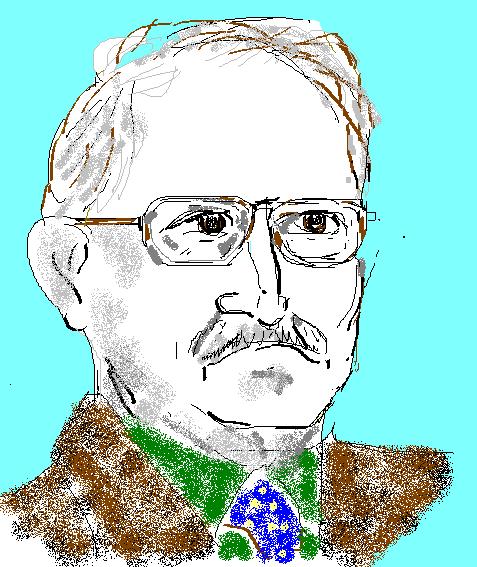
Immanuel Wallerstein died on the 31st of August of this year. He put forward some interesting ideas. By calling the Soviet Union, which was a state of the dictatorship of the proletariat, a “bureaucratic workers’ state“, Trotsky had put the blame only on Stalin and the “bureaucracy” of “Stalinism“. Yet, referring to “bureaucratism” and by including Lenin, Wallerstein went further and made a total rejection. For him, socialism had never existed, and what was called “socialism” was in fact something within the context of capitalism!
With his interesting views, he deserves a posthumous analysis.
Prologue
As is known, those years when socialism suffered its temporary defeat also represent the time when Marxist-Leninist theory was targeted. The attacks on Marxism-Leninism were based on a simple reasoning: Socialism was defeated, so its theory must have been invalid!
This period had serious ideologically and politically destructive effects on the left-socialist circles, leading them to turn away from Marxist-Leninist theory, in search of various ideas from anarchism to the new left. It was in this period that the U.S. sociologist Immanuel Wallerstein came to the fore with his analysis of the world-systems. At some point, his writings and ideas were much referred to by some circles in Turkey, too, especially the Kurdish national movement and the liberal left.
Wallerstein formulated his criticisms of the old left (Marxism-Leninism) and his ideas about the new left in his writings in the period 1990-93, right after the disintegration of the USSR and the Eastern bloc. He brought together these articles in 1995 in his book After Liberalism in which he criticised capitalist world system and argued for the possibility of a more democratic and egalitarian world system.
However, it was not only capitalism that he criticised. He argued that what collapsed in 1989 was not communism but liberalism, though it may sound nice at first instance, and claimed that Soviet socialism (and Leninism) was a version of the world capitalist system (liberalism). Then he went further from “criticism of socialism” to the denial of the idea of Marxist-Leninist revolution and political power. Denying that the contradiction between labour and capital was the fundamental contradiction that characterises the system, he equated class struggle with struggles of an ethnic, gender, religious, ecological, etc. character. As he rejected organised struggle in the name of rejecting hierarchy (and because there is no power to seize), his answer was unclear to the questions of how the system would be “transformed”, by which “subjects”, and what it would be replaced with.
Therefore, despite his critical rhetoric and his claim of the “possibility” of a more democratic and egalitarian system, Wallerstein’s ideas do not go beyond being a supplement to bourgeois ideology. For this reason, a settling of accounts with his ideas would mean fighting against the destruction caused by bourgeois ideology on left-socialist ideology and politics.
Introduction
In his “world system analysis“, Wallerstein, just like all post-Marxist authors, sets a new mainstay for his analysis, claiming that Marxism has shortcomings. For him it was the Annales, “Structuralist School of Historiography“, led by Fernand Braudel and claimed to “develop a holistic and many sided, demographical, geographical, linguistic, cultural and anthropological understanding of historiography“, “surpassed” the Marxist materialist approach which it considered to be “economic determinist“.
The Structuralists consider Marxism to be “economic determinist” because Marxism puts the mode and relations of production at the centre when analysing the laws of development of society with a historical materialist approach. In the name of “developing a holistic approach to historiography“, the Structuralists equate these laws with other historical, cultural, geographical, demographic, linguistic, etc. factors, which are in fact of secondary importance. The abandoning of the laws of development of societies and the replacement of the relations covered by these laws with the relations between secondary factors in order to form a structural-holistic approach inevitably leads structuralism to a positivist historical-societal understanding. It is this positivist understanding that forms the basis for all claims that class struggle has lost its significance and withered away, since at the present time class struggle is relatively weak and the struggles in the ethnic, religious, gender, ecological etc. areas have come to the fore.
Yet, the starting point of Marxism is not the relations between those secondary factors: indeed, leaving aside the geographical factors, all others depend on and are determined by the material economic basis of society and its laws of development. Marxism affirms the fact that human beings’ social, political and intellectual lives are determined by the production of material life, which is independent of their will, and by the objective relations formed around it.
Contrary to the criticism directed at it, Marxism does not claim that the economic factor (mode of material production) is the one and only determinant. Engels responds to such criticisms with the following words: “According to the materialist conception of history, the ultimately determining element in history is the production and reproduction of real life. Other than this neither Marx nor I have ever asserted.”
Therefore, the fact that the economic structure is the base does not mean that the political, legal, religious, etc. elements of the superstructure have no effect on the process of social development. On the contrary, the Marxist laws of development of society enable us to understand the conditions in which these elements occur and the levels and limits of their effects on social processes. For this reason, Marxism defines social classes and the struggle between them in accordance with the place they hold in the historically-determined production system, their relations with the means of production, and their roles in the social organisation of labour. However, those who claim that the working class has changed its character and has lost its revolutionary role cannot say which of these objective criteria that determine classes have changed for the working class.
Yet the primary thesis of the book After Liberalism by Wallerstein, who was influenced to a great extent by the Annales‘ structural/holistic conception of history, is based on the claim that the “dissolution of the U.S.S.R., the fall of communism and the collapse of Marxism-Leninism as an ideological force in the modern world” shows “even more the collapse of liberalism and our definitive entry into the world after-liberalism’. Wallerstein bases his thesis on the following claims: That, although the period from 1789 to 1989 was perceived to be a period of struggle between “three ideologies” (conservatism, liberalism and socialism), liberalism had in fact likened the other two to itself and declared its hegemony; that Leninism, though seemingly opposed to liberalism, was in fact “one of its embodiments” and by its defence of the right of nations to self determination it implemented the “Wilsonian liberal programme“; and that “the 1968 revolution” had invalidated the Marxist-Leninist idea of revolution and political power. In accordance with these claims, what “collapsed” in 1989 “was not socialism but liberalism“. Wallerstein goes on to say that what is possible “after liberalism” is not a world without classes and exploitation but “a more egalitarian society,” meaning something “a bit better” than liberalism, but definitely a form or manifestation of capitalism.
Let us go into some details.
I
In his book, in the chapter titled “Three Ideologies or One? The Pseudobattle of Modernity“, Wallerstein opens for discussion the “three great political ideologies” of modern times – conservatism, liberalism and socialism. He argues that, although “most people believe that there are some essential differences between these ideologies,” there are disagreements “about what these presumably essential differences are.” “There are conservatives who see no essential difference between liberalism and socialism, socialists who say the same thing about liberalism and conservatism, and even liberals who argue that there is no serious distinction between conservatism and socialism“. To prove his point, Wallerstein goes on to talk about the “proof” that there was a “reconciliation” between liberals and socialists until 1830s and between liberals and conservatives after 1848. Again, by reducing the “difference” between these “three ideologies” to their position on modernity and development, he defines the points differentiating conservatism, liberalism and socialism consecutively in the following manner: “circumscribe the danger as much as possible; achieve the happiness of mankind as rationally as possible; or accelerate the drive for progress by struggling hard against the forces that were strongly resisting it.” Then the author explains the conclusion he has reached as a result of his analysis with this question: “In this case, would it not be correct to conclude that since 1789 there has been only one true ideology, liberalism, which has displayed its colours in three major versions?… In the 120 years after 1848 – that is, at least until 1968 – under the guise of three ideologies in conflict with each other, we really had only one, the overwhelmingly dominant ideology of ‘liberalism.’”
What is his definition of ideology then? Wallerstein defines “modern ideologies” as “the ways in which people coped with this new situation” in the face of political change, the turning point of which was the French Revolution. However, even this definition does not alter the fact, as stated by Marx in his 18th Brumaire, that ideologies are shaped by different forms of ownership and by the conditions of social existence. Different classes and strata, whose distinction Wallerstein obscures by calling them “people“, try to stop the “new situation” from harming their interests or to use it for their own interests. This shows that different ideologies are in fact “different world views” determined in accordance with the interests of different social classes and strata.
Marx expresses the struggle between the two camps of bourgeois ideology, which Wallerstein considers “conservatism” and “liberalism“, in the following way:
“Orleanists and Legitimists found themselves side by side in the republic, with equal claims. If each side wished to effect the restoration of its own royal house against the other, that merely signified that each of the two great interests into which the bourgeoisie is split – landed property and capital – sought to restore its own supremacy and the subordination of the other. We speak of two interests of the bourgeoisie, for large landed property, despite its feudal coquetry and pride of race, has been rendered thoroughly bourgeois by the development of modern society.”
It is understandable that different classes and strata blame other ideologies on the basis of their own “ideologies” in defence of their interests, which the author describes as “the way they overcome the new situation“. However, rhetorical ambiguity (which obscures the differences between “ideologies“, each of which claims to defend “the interests of the whole nation or of all humanity“, not just of “one class or social stratum“) does not change the fact that “ideologies” correspond to different social beings and class interests. Therefore, basing one’s analysis on the rhetoric and coming to the conclusion that the differences between these “ideologies” are vague means to deny the existence of social conditions that determine these “ideologies” and the existence of different class interests.
Obviously, this approach leads to an upside-down relationship between social being and thought (here ideology) and replaces the ‘essence’ with the appearance, in the name of developing a “holistic” approach. However, what the author said earlier, regarding the “compromise” between liberals and socialists against conservatives before 1848 and between liberals and conservatives against socialists after 1848, does not prove the vagueness of differences between these “ideologies“. On the contrary, it proves the existence of struggle between different classes and strata for their own varying interests. Before 1848, when the working class was relatively weakly formed, they and the other toiling strata sided with the industrial bourgeoisie against feudalism and its continuation, the “conservative” land bourgeoisie, but after 1848, when the working class struggle began to grow, the “conservative” and “liberal” sections of bourgeoisie united against the working class. Marx explains the “compromise” between various bourgeois camps during the 1848 Revolution and how they got the support of other social strata as follows:
“During the June days all classes and parties had united in the party of Order against the proletarian class as the party of anarchy, of socialism, of communism. They had ‘saved’ society from the ‘enemies of society’. They had given out the watchwords of the old society, ‘property, family, religion, order’, to their army as passwords and had proclaimed to the counter-revolutionary crusaders: ‘In this sign thou shalt conquer!’”
Let us state again: Wallerstein bases his analysis on ideological rhetoric while ignoring the class interests that shape this rhetoric, thus falling into idealism. For example, based on their rhetoric and without considering their aims, he makes equal the two different approaches by Wilson and Lenin to the right of nations to self determination, and falls into the mistake of saying that Wilsonianism compared Leninism to itself.
On the other hand, the struggle between the “traditional” and “liberal” factions of the bourgeoisie during its fight against feudal remnants was replaced by the struggle of all bourgeois factions, including the aristocracy, united and “reconciled“, against the working class when this class began to rise against the bourgeoisie. As different forms of “bourgeois ideology“, “liberalism” and “conservatism” have become different rhetoric of the same ideology used against the working class. In their initial period of development, for instance, bourgeois liberals acted together with and united with the working class and other toiling masses in their fight against the church and religion, but when the struggle between the working class and the bourgeoisie heightened, they did not refrain from approaching these institutions once again.
Wallerstein is mistaken again when he reduces the differences between ideologies to the “pace of development“; he in fact distorts the fact in preparation for what he is to argue later. In various places in his book, Wallerstein himself suggests that “capital accumulation” is capitalism’s raison d’être. If capital accumulation is the raison d’être of capitalism and “liberalism” is its hegemonic ideology, then what lies behind the liberal ideology envisaging a better future as society advances – as production increases – is nothing more than its desire to win over the whole society to the side of this type of exploitation, and to prevent the rebellion of the working class and other toilers against this order. Therefore, replacing “socialist revolution” with “liberal reforms” and preaching that society will keep going forward in this way implies that the difference between the two ideologies is much more than the “pace of advance.”
In Wallerstein’s analysis of this topic, the mode and relations of production are consciously ignored. This is because even if liberalism promises “a happier and freer future“, for this to be materialised the capitalist mode of production needs to change, as do the relations of exploitation between capital and the working class (the working class has to sell its labour power in order to live and the bourgeoisie holding the means of production buys this labour power in order to accumulate capital through the production of the surplus-value). Liberalism bases all its rhetoric on “class cooperation and reconciliation” for the continuation of this order. Yet, socialism envisages an “advancement” based on the elimination of capitalist private property and of the contradiction between labour and capital, arguing that the future classless, stateless, free society could only be possible on this basis – on the basis of class struggle. Thus, what determines the difference between liberalism and socialism is not the “pace of advance” but which social-class interests and what kind of “transformation” they envisage.
II
Wallerstein does not randomly suggest his theses mentioned above. When he talks about the “overwhelmingly dominant ideology of liberalism” for at least 120 years (from 1848 to 1968), he also claims that Leninism was “tamed” by liberal ideology (one of the manifestations of this was the Wilson programme, the principles put forward by US president Wilson in 1917 when he declared war against Germany). This is because, he says, “The key issue to which both ideologies addressed themselves,… was, both for Wilsonianism and for Leninism, ‘national development,’ and that the essential dispute between them was merely about the path to such national development.”
There were similarities in the struggles for the right of oppressed nations to self determination which were linked to different strategic objectives: one (Wilson’s) had to be opened to imperialist plunder, and the other (Lenin’s) to emancipation from imperialist capitalist exploitation. Wallerstein based his “advance” on just these similarities, and struck his “fatal” blow with his description of the “new role of Leninism“: Based on “classical liberal postulates” Wilsonianism “defended the right of the peripheral and semi-peripheral regions to self-determination” while “Lenin pursued very similar policy objectives under the quite different slogans of proletarian internationalism and anti-imperialism.” From Lenin’s new emphasis on the “East” at the Comintern’s 1920 Congress of the Peoples of the East in Baku, Azerbaijan, Wallerstein comes up with a “new emphasis” for Marxism: “Marxism-Leninism in effect was moving from its origins as a theory of proletarian insurrection against the bourgeoisie to a new role as a theory of anti-imperialism.”
For Wallerstein, there were some differences between Wilsonianism and Leninism, both of which he considered to be ‘national developmentalist’; however, these had to do with “details” rather than the essence, although even according to his description they should be considered part of the essence. Wilsonians, for example, were for the dissolution of the colonies through a “constitutional path“, i.e. “negotiations“; Leninists, on the other hand, were for “more insurrectional paths” and for independence “to be taken rather than given.” Also, there were disagreements between these two ideologies regarding the “leadership of the struggle for the right to self determination“. It was the “bourgeoisie” for the Wilsonians, and the “party modelled on the Bolshevik party” for the Leninists. However, for Wallerstein, these differences should not be “exaggerated” because they were no more than “different paths” towards “national development“!
Although what he said does not exactly correspond with the meaning he wanted to convey, Wallerstein wanted what he constructed in his mind, in other words, his construction was apt for his want.
Wallerstein adopted the approach of Annales which denied the interaction between the material production of life and the ideological-cultural-political shaping of society in the name of eradicating the “artificial difference” between social sciences (economics, history, geography, anthropology, etc.). We see the same approach in his analysis of liberalism and Leninism. First of all, although free competition, which was the main pillar of liberalism, was replaced by monopoly, and neoliberalism was now the norm in the economic field, the continuation of the liberal rhetoric in the ideological-political field was enough for Wallerstein for the “absolute hegemony” of liberalism. In connection with this, Wallerstein’s “holistic” approach (taking capitalism as a ‘whole’), which was one of the most important starting points of his ‘World Systems Theory,’ denies the fact that monopolies and imperialism was a stage of “historic capitalism” for the sake of the “study of the long-term cycles of the system“.
Liberalism emerged and developed as the ideology of the bourgeoisie against feudalism in the “Enlightenment” era (and later as an ideology of industrial bourgeoisie against the land bourgeoisie and its “conservatism“). Economically the liberal bourgeoisie was for the liquidation of the feudal order and for free competition, and politically for the “fundamental rights of the individual from birth” for the sake of the creation of “free individuals,” free to hire their labour power instead of the feudal relations of production, which bound the producer (the serfs) to the land. With its banner of “liberty, equality, fraternity,” it was able to unite the toiling masses (workers and peasants) against feudalism. According to liberal ideology, the social order must be based on two principals: Free competition (free enterprise) and the freedom of the individual. For free competition (with the slogan “laissez faire – laissez passer”) there should be no state intervention in the economy, as it was already being regulated by the “hidden hand of the market“.
Capitalism is a system where production is carried out for maximum profit in order to accumulate capital and it is based on the exploitation of the labour power (which has become a commodity, which the worker has to lend to the capitalist, and through which “surplus value” is produced). Without the exploitation of the labour power of the worker (surplus value) it is not possible for the capitalist to make profit and accumulate capital. Thus, the capitalist mode of production necessitates the encounter of the worker who sells his/her labour power and the capitalist who hires it for a certain period of time, as “free individuals with equal rights before the law“. It is these production relations which require liberalism as a bourgeois ideology to be “libertarian“, taking the individual at its centre against feudalism and “conservatism“. Free exchange, i.e. trade, and the freedom of selling one’s labour power in order to feed oneself, i.e. to be exploited! Otherwise, this “libertarian” approach of “laissez faireism,” which is so against state intervention, since the 1848 Revolution has not refrained from calling for the help of the police, army and judiciary of the “liberal state” when working class actions become a threat to bourgeois interests.
Free competition is the basis of libertarianism; thus, one side of this libertarianism involves all capitalists united against workers in order to hire their labour power as cheaply as possible, and the other, there is a harsh competition among them. This competition leads many capitalists into bankruptcy and dispossession, as laws of capitalist production function: rapid development of productive forces to maximise surplus value, contradiction between the development of the productive forces and the mode of production based on the private ownership of the means of production; this contradiction leads to economic crises, capitalist accumulation, centralisation of capital, etc. “That which is now to be expropriated is no longer the labourer working for himself, but the capitalist exploiting many labourers. This expropriation is accomplished by the action of the immanent laws of capitalistic production itself, by the centralisation of capital. One capitalist always kills many.”
This means that capital is concentrated in fewer hands and leads to monopoly at a certain stage of the development of free competition. Although Marx confirmed this tendency of capital in his writings, it was not possible to pinpoint an “absolute hegemony” of monopolies in his time. Engels wrote about this process of monopolist hegemony, and as production continuously concentrated and intensified, in the late 19th and early 20th century a small number of monopolies began to dominate capitalist production and, though laws of free competition seemingly continued to exist, “old capitalism” was replaced by the “monopoly” capitalism. Monopolies dominated every sphere of the economy and this went hand in hand with the emergence of finance capital, i.e. industrial capital becoming intertwined with bank capital. Thus, Lenin describes this “new” capitalism as the “stage” when “the domination of capital in general” was transformed into the “domination of finance capital“. Finance capital does not only increase the capitalists’ power; it also gives them the opportunity to control much more than what they own. Thus, imperialism emerged as a “new stage” of capitalism when at a certain stage of capitalist development some of its fundamental features turned into their opposites (free competition into monopolies).
Regarding our subject, what is important here is that under imperialism, liberal (free competition) capitalism left its place to monopoly capitalism. In this era, the continuation of the use of “liberal rhetoric,” which was to consolidate the material bases of capitalism in the liberal stage, means nothing more than benefitting from it as a veil for monopolist expansion. This also causes a distortion in Wallerstein’s approach to what he calls democracy when he denies the fact that imperialism is a new stage of capitalism and talks about the “absolute hegemony” of liberalism.
In the liberal period of free competition the bourgeoisie used “individual rights and freedoms” against feudalism in order to win over the toiling classes and consolidate the material bases of capitalism. However, in the monopolist stage it uses these “freedoms” as a “veil” and as an instrument for legitimising its hegemony. Yet from these developments, Wallerstein draws the conclusion that “democracy and liberalism” are “opposites“!
He argues that “democracy and equality” are “inseparable,” and defines liberalism on the basis of an abstract concept of “democracy” that he constructed in his mind. However, at some point the bourgeoisie had no complaints against “liberal democracy“. What is also debatable is his abstract concept of “equality,” which he formulated as a denial of the determining character of the material living conditions. For example, Wallerstein says that the difference between the bourgeoisie and the working class should not be “exaggerated” on the question of who should lead the struggle for the right to self determination. Knowing this, one wonders where he places the elimination of class exploitation in the relationship he sets between “democracy” and “equality“, or whether what he calls “equality” could be realized when classes still exist.
It is understood that in Wallerstein’s vision of “equality“, the eradication of exploitation is an insignificant detail, just as is the question of class! Does it envisage a formal equality in appearance, just as the one between the feudal aristocracy and the then “young” bourgeoisie when certain privileges of the feudal aristocracy such as racketeering or taxation were lifted, or an equality in the sense that classes would be eradicated? In bourgeois democracy, as one form of the bourgeois state, “equality” is something formal, just as is democracy, and it is a veil for the protection of bourgeois interests, mainly the hegemony of capital over labour. In this sense, bourgeois democracy is in fact a “dictatorship” over a large, toiling, section of society, but working class democracy (proletarian dictatorship) is democracy for the working class and toiling strata, while it is a “dictatorship” for the bourgeoisie whose hegemony in the bourgeois state and whose relations of exploitation are eradicated. Therefore, despite his seemingly nice words, Wallerstein lives in a dreamland with his mistaken conceptions, if he is not covering up the fact that with bourgeois objectives democracy is a form of state and has a class character.
In the imperialist stage, “liberal democracy” is meaningful in the elimination of obstacles to the bourgeois class for its monopolist exploitation, expansion and force. US President Wilson’s principle of the right of nations to self-determination, put forward in January 1918, must be evaluated in this framework. Just as in its liberal (free competition) stage, when capitalism needed “free individuals” who had nothing to sell but their labour power (which is in fact a sine qua non for capital accumulation, capitalism’s raison d’être), what was needed after the First Imperialist War of Redivision was “the right of nations to self determination” as a form of redivision of the defeated countries by the victorious imperialist countries. In other words, under the guise of “freedom of self-determination,” the nations under the yoke of others, such as the defeated Ottoman Empire, were opened up to plunder by the victorious imperialists and to redivision by the victors. In this respect, what Wallerstein calls the Wilsonian principle of “liberalism” “in defence of the right to self-determination of the peripheral and semi-peripheral zones of the world system” was in fact brought about and functioned as a principle of imperialist expansionism during and after the imperialist war. By confusing Lenin and socialism with liberalism, with his defence of Wilsonianism, Wallerstein’s position is clear: Covering up imperialist expansionism.
What is also clear is that Marxism-Leninism defends the right to self-determination as a democratic right of the oppressed nation against the imperialist yoke and against repression by the oppressing nation, and considers it a contribution to strengthening the possibilities of the struggle for socialism, to break down the nationalist walls through equal rights of nations, and pave the way to the advancement of class consciousness and the struggle of the working class as an internationalist class. Also, in such conditions where the working class (socialism) is in power in any part of the world, the defence of this right would strengthen socialism and the solidarity between oppressed nations, and weaken the imperialist front.
In short, for Marxism-Leninism, the right to self-determination, with its aim of preventing imperialist expansionism and lifting the barriers to the struggle of the working class for a world free from exploitation, is completely different from Wilson’s principles with their imperialist essence; they in fact serve two opposite aims. However, if, like Wallerstein, one does not see the class character of democracy and the connection between ideology and the relations of production, then one would not see any harm in equating Wilsonianism and Leninism by just looking at their words on the right to self-determination, and claiming that there is no need to “exaggerate” the differences between the two.
Regarding the question of who is to lead the national movement (the bourgeoisie and its national party or the working class and a party of the Bolshevik type), another difference Wallerstein also suggests should not be “exaggerated” is the question of which path the fight for the right to self-determination should take: the “conciliatory” path or the “revolutionary” path? Having received praise particularly from the conciliatory national movements, what Wallerstein suggests is unimportant and should not be “exaggerated” is in connection with the debate on who is to lead the movement. When it is not possible to stop the oppressed nation’s national movement, the question is whether this “self-determination” should be turned into an instrument of reconnecting the oppressed nation to the imperialist-capitalist system, or whether it should be an instrument for freeing the oppressed nation from the imperialist yoke and establishing a revolutionary-democratic people’s power. If the struggle between the working class and the bourgeoisie is not meaningful and therefore the question of who leads the struggle for “self-determination” is insignificant, and if the capitalist system is considered to be an absolute fate, then, of course, the difference between this right being used to reconnect the oppressed nation to the imperialist-capitalist system in order to continue with national enslavement, or to be used to move forward to socialism via a revolutionary-democratic line, is also insignificant.
III
Is Leninism for “national development“? Since Wallerstein denies the imperialist stage of capitalism (and the law of unequal development) he comes to the conclusion that it is. The law of unequal development, in connection with the development of contradictions of the imperialist world system, creates the conditions for the revolution to develop in the weak link(s) of imperialism. The Soviet Revolution is the most typical example of this. To consider the attempt to construct socialism in one country, as if it is a preference, as being for “national development“, just as Trotsky did, is in fact nothing more than a submission to imperialist expansionism under the guise of “revolutionary” rhetoric such as “permanent revolution” or “world revolution“. As a result of the law of unequal development, when revolutionary conditions emerge in an “advanced” or “less advanced” country – in terms of the level of capitalist development – in the imperialist chain, what should the proletariat of that country do? Should they wait for the “world revolution” to take place before they move or should they take the path of seizing power and advancing the prospects of the struggle of the working class and the oppressed peoples against the imperialist-capitalist system on a world scale on the way to the ultimate victory of socialism?
Drawing a “national developmentalist” conclusion from socialism shows that Wallerstein has a distorted view of a “nation“, since a nation is “a historical category” which emerged at the dawn of capitalism. For the bourgeoisie, “nation” means, above all, the control over the lands where this historical category took shape, i.e. its own market. However, after this control is exerted, the concept of “nation” becomes an instrument for the bourgeoisie to conceal its exploitation and its expansionist desires. The bourgeois ruling class presents the relations of exploitation that it had established in their states and its expansionist imperialist desires to be in the “national interest“.
One of the fundamental differences between Leninism and those social-chauvinist parties of the Second International that went to war in support of their own bourgeoisie in the First Imperialist War of redivision was that the revolutionary party of the working class (Bolshevik Party) rejected the notion of “national interest” and exposed it as in fact the interest of the bourgeoisie. The Bolshevik Party responded to the imperialist expansionist war policies of the Russian bourgeoisie with the slogan “a revolutionary civil war“. The Marxist-Leninist party defends the international interests of the working class instead of the bourgeoisie’s “national interest“, and carries out its fight on this basis. Here, it comes to the same point: when the opportunity arises to seize power in one or more countries, whether the working class will take this opportunity to break the imperialist capitalist chain and use it for the ultimate victory of socialism, or whether it will accept the defeat beforehand of the “world revolution” and submit to imperialist capitalist exploitation and expansion. (Another option for the latter path is, if power was seized in one country but revolution did not break out in other countries, to be adventurist and try to follow the tall order in order to expand the revolution. We know that Wallerstein did not make such a suggestion, since he considers even the difference between the bourgeoisie and the working class to be over-empathised!) Therefore, for Marxism-Leninism, the struggle of the working class to take power in one or more countries and construct socialism is a new dimension of the class struggle between the bourgeoisie and the working class in the imperialist capitalist era. However, socialist construction under such conditions does not mean an ultimate victory of socialism; it means that the continuous class struggle bears the danger of a “reconstruction” (of the old system).
As the most important proof of Leninist “national developmentalism,” Wallerstein points to Lenin’s slogan “Communism equals the Soviets plus electricity.” As the question of which class holds power is an insignificant detail for him, he ignores the question of the “Soviets” and concentrates on electricity. Yet the Soviets were an instrument of working class democracy and its sine qua non.
The Soviet system is based on people organising in assemblies in their living and working places and their participation in the processes of governing through these organisations. In this respect, the Soviets are an instrument of democracy in complete opposition to bourgeois democracy, which only involves people going to the ballot box at certain times, and which the bourgeoisie uses to cover up its relations of hegemony and exploitation. The Soviets emerged as a model of organisation for the working class and toilers under the conditions of an uprising, and became an “organ of power” under working class rule. In this respect, it is a “specific” form of working class democracy. The workers and toilers elect their representatives and hold them to account. In this respect the Soviet system is based on the elimination of the conditions of exploitation by the bourgeoisie and the formation of a “new life” that represents the most advanced form of democracy with its principle of “from each according to their ability, to each according to their work.”
For this reason, “development” in the Soviet Union was not a national one; if we have to speak of “development” then it is one in a land where it involves the working class, which is an international class, taking power and realising the elimination of the bourgeois order of exploitation. In other words, this “development“, which is also economic progress, becomes meaningful, in essence, with the construction of the socialist economy as a transition to a communist society free from classes and exploitation. This was true not only with the liquidation of the Russian bourgeoisie but also as a pillar of the working class struggle against the international imperialist-capitalist order.
This is in fact the reason for the all-around encirclement and attacks against the Soviet Union by the imperialist-capitalist system since the working class took power in 1917. In other words, it is not the “national development” of the USSR that drove out imperialist capitalist attacks, but the fact that the working class eliminated the conditions for bourgeois exploitation in that particular part of the world, and this posed a threat to the bourgeoisie as a whole. Therefore, the first part of Lenin’s slogan “Soviets + electrification” refers to working class democracy (and its dictatorship over the bourgeoisie), while the latter refers to socialist production and construction against the bourgeoisie who had lost power but was still very resistant, and to the “advancement and development” of course, to the working class and toilers establishing an economic system free from exploitation.
However, Wallerstein skips the part about which class leads this “development” and for what purpose, and declares Leninism to be “national developmentalist” on the basis of a “development” that had taken place in the USSR where the working class had seized power. Yet the answers to the questions of who leads this “development” and for what purpose determine the direction of this development, and explain its position vis-a-vis the exploitation of human labour and nature.
To conclude, in the era of imperialism and proletarian revolutions, it is not only that “liberalism“, which is a veil for imperialist expansionism, and Leninism, which is the theory of proletarian revolution, have two different paths, but they also have two completely opposite visions of the future. However, if one leaves aside the laws of development of society and class struggle and uses a method of analysis, with one foot on rhetoric and the other on facts (as in the case of equating the rhetoric of liberalism and Leninism on self-determination and policies of “development”), one could equate Leninism with liberalism and find a possibility to distance oneself from the Leninist idea of revolution and power, just as one could draw the conclusion that there is no difference between the sea and the atmosphere because they both contain oxygen!
Labour Party – Turkey (EMEP)