Arif Koşar*
Introduction
With advancements in digitalisation and artificial intelligence, examples of full automation at the operational level are on the rise. This trend is likely to accelerate in the coming years.
In fully automated operations—at least in theory—there is no human intervention. Since no workers are employed, there is no need to turn on the lights, which is why they are referred to as “dark factories.”
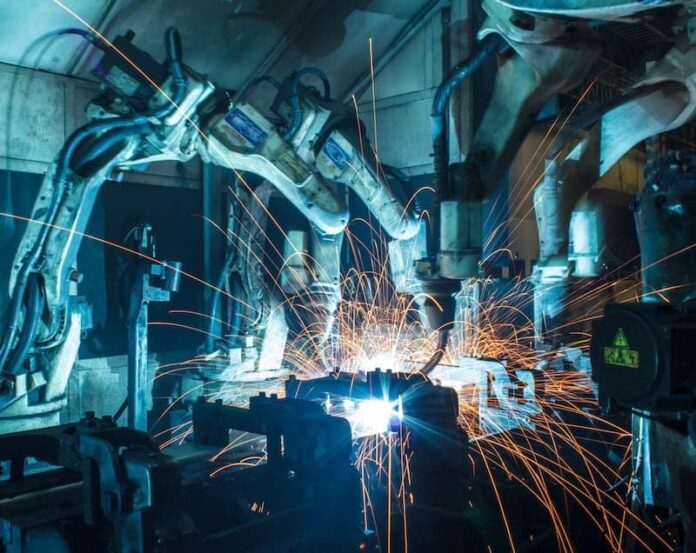
One of the most famous dark factories is the Fanuc facility operating in Japan. At the factory, robots produce various machines, such as CNC machine tools. Workers are present at the facility only for routine maintenance or in case of potential issues; the plant operates continuously for 25 days a month, except for breaks taken for monthly maintenance.[1] Czech writer Karel Čapek envisioned a similar scenario in his 1920 play R.U.R. (Rossum’s Universal Robots), where robots produce other robots. [2]
Kapek, in the 20th century, questioned the human-machine relationship in various dimensions as machines took over life in giant strides. We don’t think Fanuc is particularly interested in that. What matters to them is that workers have been almost entirely removed from the production process and the benefits this provides. First and foremost, efficiency. Because robots work tirelessly, non-stop, 24 hours a day. Of course, there are maintenance costs, but they never demand a pay raise. They have no complaints. They don’t get sick or take annual leave. They don’t join unions or demand a say in matters. Kapek’s story, in a way a dystopian tale, amounts to a highly profitable utopia for Fanuc executives. A capitalist utopia where there are no workers but the bosses live in wealth… Aristotle’s vision in Politics had almost become a reality: “…if the shuttle of the loom were to move back and forth on its own, and the plectrum of the lyre were to play by itself, then neither would producers need workers nor masters need slaves.”[3]
There are fully automated or nearly automated facilities beyond Fanuc as well. At the Philips factory in the Netherlands, which produces electric razors, there are no workers aside from a few quality control specialists. German company Stihl operates a chainsaw production facility in Virginia Beach where welding, riveting, painting, and packaging processes are fully automated from start to finish. [4] At Constellation Brands’ brewery in Mexico, only 6 workers are on duty per shift.[5]
The number of such “dark factories” is quite small today. Nevertheless, they raise some important questions. For instance, what will be the role of the working class in economic activity? Are we moving toward a world where jobs have disappeared or lost their significance? On what basis will social relations be established in such a world? How will the production and distribution of wealth take place? There are also questions of particular importance from a Marxist perspective. One such question is posed by historian Yuval Noah Harari, who identifies as a liberal democrat, in his book 21 Lessons for the 21st Century: “How can a working-class revolution be achieved without a working class?”[6]
Even the few questions we’ve raised here are sufficient to demonstrate the multifaceted nature of the issue. Technology, on the one hand, is produced within the capitalist mode of production; on the other hand, it significantly impacts and forces change upon all dimensions of social life. With digitalisation, life is, in a sense, being reborn in a digital form. Labour relations, production, trade, culture, and leisure practices are all, to varying degrees, affected by digitalisation.
Although the subject is multifaceted, in this article we will focus on only one dimension. The fundamental question we will address is this: According to the Marxist theory of labour value, if surplus value is not produced in dark factories, where does the capitalist’s profit come from? Related to this, will capitalism face an inevitable collapse in the future as workerless factories become widespread? These questions—especially the second one—are also subjects of debate among different economic approaches. Nevertheless, the notion that the working class is shrinking due to the spread of automation, that surplus value production is declining, that capitalism’s labour-based foundations are dissolving, and that it is heading toward a kind of spontaneous collapse persists as a widespread misconception among socialists or those interested in socialism.
The Distribution of Surplus Value
Let’s start with the first question:
Is surplus value produced in enterprises where there is no intervention by the labour force?
No. Surplus value is produced only by living labour power during the production of goods or services. In the capitalist mode of production, at the beginning of the production process, money capital (M) is used to first purchase the means of production and raw materials, and then labour power is hired. At this stage, money capital (M) has been transformed into commodity capital (C) (M-C). As a result of the operation of commodity capital (C) within a specific organisational framework, a new commodity (C’) is produced (C…C’). This new pile of commodities (C’) is the product that capital produces for sale. Surplus value is produced during the production phase (C…C’). While means of production and raw materials directly transfer their value to the commodity, labour power transfers more than its own value (in practice, its wage) to the commodity.[7] For example, while labour power produces an amount equivalent to its own value in four hours, when it works for eight hours, it produces an excess of four hours, and this excess is defined as surplus value. When the produced commodity is sold, it is converted back into money (C’-M’). The final amount of money obtained (M’) exceeds the initial capital investment (M). Indeed, the purpose of capital investment in the capitalist mode of production is to obtain this surplus, that is, surplus value. [8]
In the capital cycle, which we can express as M-C…C’-M’, surplus value is produced only during the production phase (C…C’). Under conditions where labour power is not involved—that is, where machines or robots carry out the entire production process—surplus value is not produced.
We must then ask the following question: If no surplus value is produced in the dark factory, how does the capitalist obtain one of the forms of surplus value—namely, profit?
This situation, which seems intriguing and even contradictory, is actually typical of the capitalist mode of production. One reason for the confusion is that the analysis is generally limited to the first volume of Capital. In Capital, Marx systematically advanced the topic of the production and appropriation of surplus value, using this as a starting point to explain the fundamental laws of capitalism: from the abstract to the concrete… As he moved toward the concrete and observable operation, he explained the mechanism of this reality starting from a high level of abstraction. He reconstructed the abstract and vague picture step by step as concrete relationships in thought. For example, in the majority of the first volume, it was assumed that the ratio of variable to constant capital (the organic composition of capital) was the same across all sectors. This is not possible in the real world. In the third volume of Capital, this abstraction was transcended, and conditions where different sectors have different organic compositions of capital were analysed. Even this, however, is not yet the full reality of the real world. However, by moving from surplus value to the formation of profit—one of the concrete forms of surplus value—we have come a bit closer to the real world.
Marx explained as early as the first volume of Capital that the production and realization of surplus value are—though interconnected—distinct processes. This is quite important for our discussion. Even though surplus value is produced during the production of commodities (C…C’), its realization is only possible through the sale of commodities (C’-M’). When it is not sold, it remains a meaningless—and worthless—pile of commodities in the capitalist’s hands. However, when sold in the market, the surplus value contained in the commodities gains existence and is realized. [10]
If surplus value were not only produced but also realized at the firm level—that is, if each capitalist appropriated the surplus value produced within their own firm—investing in a labour-intensive sector would be far more profitable. Let’s explain this with an example:
Suppose a large private school chain employs 1,000 workers who collectively receive $10 million in wages in exchange for a $10 million investment in constant capital. In an automobile plant, however, 1,000 workers are employed who also collectively receive $10 million in wages in exchange for a $100 million investment in constant capital. As can be seen, the education sector is labour-intensive, while the automotive sector is capital-intensive. Assuming the workers labour for the same duration—enough to add twice the value of their wages to the product—the surplus value produced in both enterprises would be $10 million. Thus, the profit rate of the private school capitalist, who invests a total of 20 million dollars, is 50%, while the profit rate of the automotive capitalist, who invests a total of 110 million dollars, is 9.1%.
Of course, no capitalist would choose a 9.1% profit rate when a 50% profit is available. Capitalists enter a race to open private schools. However, as schools are opened beyond the level of demand, profit rates begin to decline. To such an extent that, as a result of excessive investments made during the high-profit period, a portion of these businesses goes bankrupt. Over time, through the movement of capital investments across sectors[11] an average profit rate emerges [12].
In the two business examples given above, the average profit margin is 15.4%. Both businesses seek to sell their products (in this case, educational services and automobiles) by adding a profit margin close to the average rate on top of their capital investment. Thus, the capitalist owner of the private school appropriates 3.1 million dollars in profit from the sale of the education service commodity—far less than the surplus value produced in their business—while the owner of the automobile factory appropriates 16.9 million dollars, far more than the surplus value produced in their own factory. As seen, the mechanism that determines the average rate of profit prevents capitalists from appropriating only the surplus value produced by the workers they directly employ—or from being limited to it. The surplus value produced across society is distributed among capitalists in various forms, primarily based on the average rate of profit.[13]
This disconnect between the production of surplus value and its realization in the market drives every capitalist to seek to appropriate more than the surplus value produced by the workers they employ. Furthermore, capitalists operating in non-productive sectors also gain the ability to appropriate surplus value produced by workers in other enterprises. The financial sector is a typical example of this. Although no surplus value is produced, financial companies appropriate a portion of the surplus value generated in the productive sector. Trade and finance are indispensable components of the capitalist mode of production; however, activities in these sectors do not contribute to society’s total production or wealth. Even if the same commodity changes hands dozens of times, the end result is still the same commodity. However, the capitalists acting as intermediaries in each transaction make a profit. The source of this profit is not the creation of new value or wealth, but the appropriation of value produced in another sector of society through the market mechanism.
Thus, the profit of the capitalist who owns the “dark factory” stems from this dichotomy between the production of surplus value and its realization in the market. Although no surplus value is produced in the dark factory, the capitalist releases his commodity into the market by adding at least an average profit margin to its cost. The source of the profit he obtains is the surplus value produced by workers in other enterprises across society. Just as monopolies like Twitter, Facebook, and Apple—which employ only a small number of workers—appropriate a massive mass of surplus —and shareholders reaping financial profits through radical increases in stock prices, banks earning massive profits without productive activities, and land or housing owners appropriating surplus value in the form of rent—the owners of these “dark” enterprises also acquire a certain mass of surplus value through market transactions. Therefore, this is not an extraordinary situation but rather typical of the capitalist mode of production.
Is it heading toward spontaneous collapse?
Although this is not our direct topic here, it is worth highlighting a few points to prevent certain misunderstandings.
First, as is already clear, the existence of “dark factory” experiences does not mean that the capitalist is not making a profit. If that were the case, no capitalist would attempt to reduce the number of workers and increase productivity.
Could the proliferation of “dark factory” examples, the increasing automation of production, and the disappearance of jobs lead to a shrinking of the working class? The connection to the surplus value debate is as follows: If we proceed from this assumption, the total amount of surplus value produced will decrease as the working class shrinks, and it will become increasingly impossible for companies to make sufficient profits. A “capitalism” without surplus value production would mean the spontaneous collapse of capitalism.
There is a seemingly plausible aspect to this argument, but it rests on a flawed assumption. The idea that the working class is shrinking is an illusion created by advancing technologies. Moreover, it is an illusion that aligns with common sense. It also aligns with the widespread propaganda of bourgeois thinkers that technology is all-powerful and that the importance of labour is gradually diminishing. However, the general trends of the capitalist mode of production do not operate in a way that aligns with common sense. Contrary to expectations, technological advancements function by creating new jobs and sectors. The necessity of capital accumulation dictates the growth of the working class—despite trends toward financialization and automation.
Technological advancements and the rise in automation often lead to a proportional—and at times quantitative—decline in the number of workers at individual workplaces. Examples of businesses operating with no workers or with a significantly reduced workforce compared to the past are countless. However, overall, the number of workers is not decreasing but is actually increasing strongly. Countries like Germany and Japan, which could be considered exceptions due to demographic crises, are exceptions; yet even in these countries, while the workforce is growing—albeit slowly—labour shortages are cited as the biggest problem. Setting these exceptions aside, there has been an extremely rapid increase in the number of workers both in individual countries and globally. While the number of wage and salary earners worldwide was around 1 billion in 1991, it exceeded 1.75 billion in 2021. [14] We will not delve into the details here, but this situation is related to the existence and use of technology within a capitalist context and as an extension of capital accumulation. While the capitalist mode of production reduces the number of workers per enterprise on one hand, it must create new jobs, enterprises, and sectors and draw new masses of workers into the vortex of capitalist exploitation. Therefore, the trend is not toward workerless production or toward capitalism itself. While such a capitalist utopia may adorn the dreams of every capitalist forced to deal with workers and their struggles, the general trend is in the opposite direction.
As the number of workers increases, the mass of surplus value produced also grows. This picture refutes the assumption of spontaneous collapse linked to a shortage of surplus value. [15]
Even without reaching the argument of spontaneous collapse, there is another critical dimension regarding the general trends of capitalism: With the rise in automation, the organic composition of capital is increasing, which leads to a decrease in the ratio of workers’ wages (variable capital) to total capital. One consequence of this is the proportional shrinkage of the share allocated to workers in total capital investment, and consequently, the decrease in the ratio of surplus value (even if it is increasing in absolute terms) to total capital.[16] This explains the observed trend of declining profit rates in individual countries and globally. [17]
However, this situation does not imply the spontaneous collapse of capitalism. There are nearly two billion workers worldwide who have not been incorporated into wage labour and who account for nearly half of the global workforce. From this, it is possible to conclude that as the production of surplus value and the decline in profit rates intensify, capital will launch an even more intense war against the working classes, aiming to dispossess them and increase the rate of exploitation.
Finally, it must be emphasized once again that, theoretically, a form of capitalism dominated by full automation is impossible both in terms of the production of surplus value and the realization of surplus value. On the other hand, current data also shows that automation, as an extension of capital accumulation, does not lead to a society where work is eliminated (such as a neo-feudal or post-capitalist society), but rather that automation coexists with the proletarianization of labour. And this is not a logical error but one of the typical outcomes of the capitalist mode of production. In the context of capitalism, the critical impact of advanced technologies such as automation and artificial intelligence lies not in bringing about “the end of work,” but rather in the significant changes they bring to the content of work, the way it is performed, and the composition of the working class.
* This article was originally published in Teori ve Eylem, No62, Winter 2023-24
[1] Weber, A. (2019) “Lights-Out Automation: Fact or Fiction?” Assembly, https://www.assemblymag.com/articles/94982-lights-out-automation-fact-or-fiction?
[2] Capek, K. (2021) R.U.R. (Rossum’s Universal Robots), trans. A. Eylem, Notabene Publications, Istanbul.
[3] Aristotle (1975) Politics, trans. M. Tuncay, Remzi Bookstore, Istanbul, p. 12.
[4] Weber, “Lights-Out Automation: Fact or Fiction?”
[5] Tracy, P. (2016) “Lights-out manufacturing and its impact on society,” RCR Wireless News, https://www.rcrwireless.com/20160810/internet-of-things/lights-out-manufacturing-tag31-tag99
[6] Harari, N. H. (2018) 21 Lessons for the 21st Century, trans. S. Siral, Istanbul: Kolektif Kitap, p. 49.
[7] Marx, K. (2000) Capital: Volume I, trans. A. Bilgi, 6th ed., Sol Publications, Ankara, p. 195.
[8] Marx, Capital: Volume I, p. 188.
[9] Variable capital is the portion of capital set aside in exchange for the value of labour power. Constant capital, on the other hand, is the portion of capital used to purchase means of production, raw materials, and energy. Since labour power adds more than its own value to the commodity during the production process, the capital allocated to labour power is referred to as variable capital.
[10] Marx, Capital: Volume I, p. 168.
[11] Of course, the flow between sectors is not unlimited or unregulated. For example, not every capitalist can invest in the automobile sector. This requires a large accumulation of capital. Furthermore, the automobile sector is a monopolistic market and is largely closed to new entrants. However, small-scale textile manufacturing is, to some extent, open to new investments. For instance, investment in this sector increased during the pandemic as mask sales and profits skyrocketed.
[12] Marx, K. (2003) Capital: Volume Three, trans. A. Bilgi, 4th ed., Sol Publications, Ankara, p. 176.
[13] Marx, Capital: Volume Three, p. 186.
[14] Statista (2023) “Number of employees worldwide from 1991 to 2022”, https://www.statista.com/statistics/1258612/global-employment-figures/
[15] The issue also involves the struggle between the working class and the bourgeoisie, as well as the dimensions of the state apparatus and power. Since we have limited the content of this article to the context of surplus value, we will not delve into the details of these dimensions here.
[16] Marx, Capital: Volume III, p. 189.
[17] For a summary of studies on declining average rates of profit worldwide and in various countries, see Roberts, M. (2022) “A world rate of profit: important new evidence,” https://thenextrecession.wordpress.com/2022/01/22/a-world-rate-of-profit-important-new-evidence/