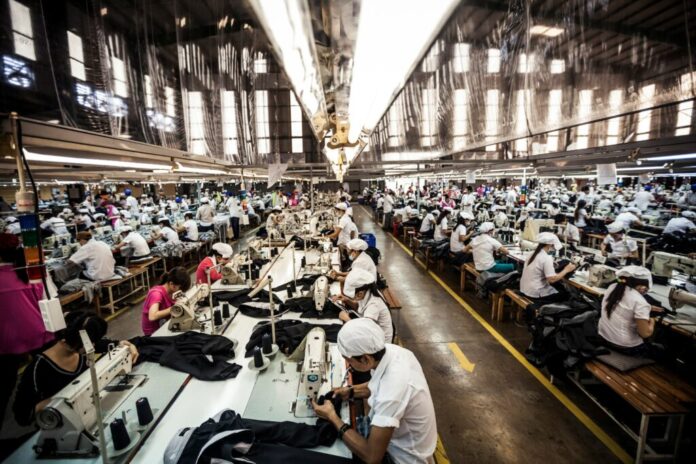
Published in Unity & Struggle No.51, November 2025
The Making of the Modern Proletariat in China
In pre-revolutionary China before the 1949 Revolution, it is undeniable that the working class, empowered by the military, strategic and financial support of the Communist International, had a history of continuous struggle against both the nationalist party Kuomintang (KMT) and the Japanese occupation and imperialist exploitation and plunder. But it is also clear that the modern proletariat cannot be considered independent of the modern level of industrial development. In the first half of the 20th century, China was a weakly industrialized country under the control of the US, Britain, Japan and other imperialist powers. Most of its industry was light industry. It had no heavy industry of its own; most of the existing enterprises consisted of repair shops, docks, railway repair shops owned by foreign capital and relatively primitive mines producing raw materials and semi-finished products for developed capitalist countries.
The machine industry, on the other hand, was barely developed and consisted mostly of the repair and assembly of machines imported from capitalist countries. Ports and railroads were developed to the extent that the imperialist exploitation needed. Mining was extremely poor. Moreover, the bombings and sabotage during the Japanese occupation and the civil war with the Kuomintang had caused great destruction of the more or less developed industrial zones.[1] By 1949, industrial production, which had suffered more than agriculture, had fallen by half.[2] In a country of about 550 million inhabitants, the overwhelming majority (400-450 million by rough estimates) lived in the countryside, where feudal relations of production prevailed.[3]
This level of economic development determined the main tasks of the 1949 Revolution, which took over a semi-feudal, semi-colonial country. In the first years of the revolution, the land, stocks and means of production confiscated from the big landowners in collaboration with imperialism were distributed through land reform to the landless and small peasantry, while the rich peasantry had not yet been dispossessed. In the urban and coastal areas, too, the property of the comprador monopoly bourgeoisie had been confiscated, while the means of production of the small and medium-sized national bourgeoisie remained untouched. While the non-dispossession of the rich peasantry and the national bourgeoisie was understandable given the imperatives of economic development, what was unacceptable from the point of view of socialist construction was to make these classes partners in political power. This approach did not change during the First Five-Year Plan (1952-1957; FFYP), when rapid industrialization policies were introduced.
The national bourgeoisie, some of whose members were directly “employed” in state enterprises, was incorporated into property categories such as “state capitalist”, “state-private”, “public-private” and so on, with categorical variations (cooperative, collective, commune, etc.) specific to each period, and this situation continued until the end of the 1970s. In short, nationalization was not carried out on a socialist basis, so private property developed under various forms in its contradiction with labour.
Certainly, this does not invalidate the fact that, starting with the FFYP, a massive industrialization process was undertaken. In addition to the confiscated enterprises of the comprador bourgeoisie, priority was given to heavy industry and related infrastructure construction throughout the FFYP, which was created with the financial, technical and human support and guidance of the USSR.
Parallel to industrialization, the development of the modern proletariat was inevitable. In the pre-revolutionary period, the vast majority of total employment was composed of self-employed artisans, and workers rather worked in small-scale workshops with an average of 10-15 employees; a smaller proportion worked in large enterprises with an average of 500 employees. During 1949-1952, the number of all wage earners increased from 8 million to 15.8 million, while the number of industrial proletarians increased from 3 million to nearly 5 million (31.25 percent of all wage earners). By the end of the FFYP period, 9 million (37 percent) of the 24.5 million wage earners were industrial workers.[4]
Interestingly, the number of wage earners and industrial workers jumped sharply in the official data for 1958. The number of all wage earners nearly doubled compared to the previous year and was shown as 45 million 323 thousand in 1958, of which 25 million 623 thousand were industrial workers.[5] This quantitative leap in appearance was, in essence, a manifestation of a change in industrialization policies. This is because the prioritization of heavy industry and the reconstruction of all other sectors of the economy on this basis, which constituted the essence of the FFYP, were opened to discussion even before the end of the plan period. Within the Chinese Communist Party (CCP) under the leadership of Mao, the idea that investment in heavy industry (and therefore in the production of the means of production) should be reduced in favour of agriculture and agriculture-dependent light industry became prominent, and it was argued that agriculture was the foundation of the economy. Factionalism within the party aside, this was the framework for all industrial and agricultural policies in the Second Five-Year Plan. The policies that were put into practice from this point onwards created a ground for free market relations to flourish from rural to urban, from agriculture to industry, undermining the central planning.
Free Marketization and Opening to International Monopolies: The Transformation of the Rural Proletariat
As a consequence of decentralization, the period of “Reform and Opening Up” was finally announced in 1978, during which the domination of capitalist relations of production was organized and consolidated by the state under the CCP. A number of “reforms” were carried out in both rural and urban areas, which amounted to marketization in both spheres. The most well-known of these is referred to as the process of de-collectivization of agricultural production. The ongoing dissolution of collective ownership in agricultural production was legally framed by the “Household Responsibility System”. Land and means of production were divided and privatized among households. Control over production was transferred to family ownership, thus formalizing rural small commodity production. During the 1980s, when the communes, the amalgamation of private group ownership, were gradually dismantled, the capitalist state monopoly on the purchase and sale of agricultural products came to an end, and households that had been buying and selling on a contractual basis with the state were now able to offer their surplus products to the market. All private property rights, such as the right to rent, sell or inherit land, were formally recognized during this decade. Subcontracting practices have emerged, as well as an ever-expanding wage labour force in agriculture.[6]
In the countryside, where 80 percent of the total population (790 million) still lived in the 1980s, another consequence of the marketization of agricultural production was the growth of the surplus population. But this labour force is unable to migrate en masse from rural to urban areas because of the population registration system (hukou).[7] This meant that tens of millions of people were available as the labour army of capitalist industrialization in the countryside. The “Township and Village Enterprises” (TVEs), which were joint ventures of private property on the one hand and enterprises belonging to administrative units which were not directly owned by the state but categorized as “public property” on the other hand, have been able to drive this army to the front line of industrial production. Throughout the 1980s, there was an explosion in the number of TVEs that focused on the labour-intensive production of individual consumer goods outside the production of state-owned enterprises. It is noteworthy that the number of enterprises belonging to administrative units did not change significantly, whereas the number of individual enterprises increased exponentially. In 1978, of the 1.525 million TVEs, 79 percent belonged to villages and the rest to town administrations, with no individual enterprises. By 1987, 91 percent of the 17.5 million TVEs belonged to individual enterprises.[8] These “disguised private enterprises” were those in which local government leaders appointed their own managers and managed the division of profits, and foreign capital maintained its control.[9]
This rapid development of capitalist industrialization in the countryside naturally triggered a rapid proletarianization. Whereas in 1978 the number of people employed in these small and medium-sized commodity production enterprises was just over 28 million, in 1996, the so-called golden year of the TVEs, 135 million workers in 23.4 million enterprises, that is, one out of every 5 workers in the whole country and one out of every 3 workers in the countryside, joined the ranks of the Chinese proletariat in these sweatshops, whose share in exports reached 33.7 percent.[10]
Towards the end of the 1990s, some of these TVEs allegedly categorised as “public property” were directly privatized, and some were corporatized, thus marking the end of the TVE miracle that had completed its function. Tens of millions of migrants unleashed by this development would flock to the factories owned by foreign capital in the cities and coastal areas.
This was also the period during which labour exploitation was opened up to foreign capital in the “Special Economic Zones” (SEZs) established in China’s coastal regions. East Asian capitalists, who were granted the right to set up factories and who were mostly suppliers to monopolies in Western Europe and the USA, brought their means of production and technologies together with the cheapest labour force in the world in these zones.
The first generation of workers who made up the labour force of the SEZs were the children of families who still resided in the village and who were themselves small business owners in the countryside. They saw working in the city as a temporary way of saving money. Considered as “temporary workers” due to the hukou system, they were deprived of social rights. There are thousands of them who could not obtain this status and migrated unregistered and therefore could not leave the enterprise where they worked. Capitalists who kept the labour force inside by certain methods such as establishing dormitories as part of factory complexes, confiscating workers’ identity cards, and taking deposits from workers during recruitment, have used various punishments, including physical violence, so as not to interrupt production.[11] By the 2000s, a completely dispossessed, cheap, unorganised proletariat had become permanent in these regions.
Privatisation and Corporatisation: Transformation of the Urban Proletariat
The transformation of state-owned enterprises, which constituted the core of industrial production in big cities, was realised in a similar but more gradual manner. From 1978 onwards, the policies pursued throughout the 1980s saw the completion of the process defined by the rulers as “the separation of ownership and management”. Decentralisation was furthered and a relationship was established between enterprises and the state on the basis of contracts regulating the division of profits. State-owned enterprises, whose share in total taxes had been around 75 per cent and which had transferred 80-90 per cent of their profits to the central government until then, were granted “privileges” such as retaining profits at rates determined on the basis of these individual contracts, offering products above a set quota to the market, and setting pricing and wages.[12] Each enterprise management was able to determine the terms of its own contract according to its bargaining with the state authorities. This marketisation, called “the contract responsibility system”, was extended to all state enterprises in 1993. Although the CCP leadership described these steps as “diversification of ownership types”, the “state ownership” of these enterprises is purely on paper. The law of value was operating and surplus-value exploitation was taking place.
In 1989, the protests that erupted in Tiananmen Square in Beijing and spread to 400 cities were born in reaction to this transformation. On the one hand, there were student marches against corruption and bureaucracy, while on the other, workers took to the squares in groups against inflation and increasing production pressure and mistreatment, especially in the workplace. During the month-and-a-half-long uprising, Beijing was reportedly transformed into an almost labour-controlled city.[13] It was the first time that the idea of workers organising independently of the sole authoritative official trade union (All-China Federation of Trade Unions) was discussed on such a large scale.[14] However, these attempts were repressed by the state apparatus to clear the way for marketisation.
Henceforth, local privatisation, which started in the early 1990s with the sale of small state-owned enterprises by local governments, was given a legal framework on a national scale in 1995 with the practices formulated by the CCP centre under the slogan ” Grasp the Large, Let Go of the Small”. Until the 2000s, small and medium-sized enterprises were transformed into share-based cooperatives, their public shares were rapidly put up for sale and the process of transfer to domestic and foreign capitalists was completed.[15] With the “Company Law” enacted in 1993, large state enterprises were also organised as limited or joint stock companies. As of the 2000s, the transfer of shares in these companies to local and foreign capitalists was started. The numerical expression of the dramatic decline in the share of state-owned industrial enterprises in all industrial enterprises (from 24.1 per cent in 1978 to 0.8 per cent in 1998) actually points to an extinction.[16]
A complementary formula of privatization is expressed in the motto “cutting workers to increase efficiency”. The CCP leadership openly declared from the outset that it would take “capital as the bindings” and “through the market, amass great enterprise groups that are of relatively strong competitive ability, multi-regional, multi-sectoral, multi-ownership system, and multi-national” at the cost of “annexations, standard bankruptcies, layoffs and departures, cutting workers to increase efficiency”.[17] The number of workers in state enterprises fell dramatically from 75 million (78 per cent of urban employment, about 19 per cent of total employment) at the start of the reform to 64 million (21.9 per cent of urban employment, 8.3 per cent of total employment) in 2007.[18]
Legal Framework of the New Labour Market
It would be expected that a labour law would be developed in parallel with all these transformations. In 1982, at the very beginning of the “reform” process, the right to strike, which was recognised for the first time in the 1975 and 1978 constitutions but remained on paper, was removed as a constitutional right.[19] From the second half of the 1980s onwards, in parallel with privatisation, an unemployment insurance fund was set up and the burden of redundancies was placed on the proletarians.
In the same period, hiring on a “fixed-term contract” basis began in state enterprises, substituting young contract workers for older workers with lifetime employment guarantees, thus undermining employment and job security. By 1994, when the new Labour Law was adopted, the share of contract workers in state enterprises had risen to 26.2 per cent. The law generalised the individual contracts, covering close to 90 per cent of workers in all enterprises.[20] The few collective labour agreements served no more than a complement to individual contracts.
Enacted on 1 January 1995, the Labour Law defined a “labour relationship” such that migrant workers, rural industrial and commercial workers, civil servants, domestic workers, vocational school students, contract workers and retirees, i.e. a large part of the Chinese labour force working in the labour-intensive, export-oriented manufacturing sectors, construction and services in the 1990s and 2000s, were excluded from this relationship. In fact, only a limited number of workers in state-owned enterprises/companies were included. Even then, disputes could be resolved first in congresses of enterprise-level managers and trade unionists; if not resolved there, in the labour arbitration body of the local government; and if not resolved there, in court.[21] This protracted and costly route was itself a policy of deterrence. Although the CCP and the Chinese government tried to control the growing unrest among workers with the “Labour Contract Law” and the new Labour Dispute Mediation and Arbitration Law in 2007, there was no substantive change. Nevertheless, the seventeen-fold increase in the number of cases submitted to arbitration in the twenty years from 1996 to 2016 (from 48,121 to 828,410 cases) shows that a significant number of workers have not given up trying this route.[22]
The Course of the Labour Movement from the 1990s to Today
The Chinese proletariat has surely not remained silent against the policies of marketisation, privatisation and opening up to foreign monopolies. Even according to official statistics, the number of workers’ resistances increased 9-10 times between 1992 and 2000.[23] The 1999 “measures” taken by the Chinese government against this rising movement are indisputable evidence of the class character of the state: For gatherings of 200 persons or more, the authorisation of local public security authorities, and for gatherings of 3000 persons or more, the authorisation of high-level security bureaus was required.[24]
Despite all these attempts at prevention, of the 58,000 “mass events” in 2003 in which three million people participated, the largest group was made up of 1.66 million workers (laid-off, retired and active). Given that, according to official trade union statistics, the total number of unpaid workers in state and collective enterprises rose from 2.6 million in 1993 to 14 million in 2000; it is understandable that the most massive and relatively organised protests were among heavy industry and infrastructure workers.[25]
For example, in 2002, when labour protests were on the rise, 50,000 oil workers in Daqing City in Heilongjiang province launched a large-scale protest in the city and attempted to establish an independent organisation, the Daqing Provincial Dismissed Workers’ Union, which was able to extend its influence first to the provincial level and then to lead oil workers in other provinces to organise solidarity strikes and actions.[26] In the same year, in Liaoning province, a strike by 3,000 workers at the Ferro Alloy Factory spread to 30,000 workers in 20 factories in the city in one week.[27] The 2007 strike by workers at the Yantian International Container Terminal in Shenzhen, one of the world’s busiest ports, is instructive for the struggle for union representation and collective bargaining. This struggle, led by experienced crane operators, resulted in the important achievement of an “annual collective bargaining system at the workplace level”. This experience, which is presented as an example of “workplace unionism”, proved to be sustainable when they were able to go on strike in 2013, this time demanding a wage increase.[28]
Among workers with rural origins in the SEZs, strikes at foreign-owned enterprises have been prominent. In the Pearl River Delta, the spring of 1993 witnessed a spontaneous strike wave. The strikes by workers in a Japanese-owned Canon factory soon spread to other factories owned by Japanese, Taiwanese and Hong Kong capitalists, triggering twelve strikes in succession, half of which took place with full participation.[29]
In the 2000s, when the Chinese economy reached double-digit growth figures, the high profitability rates announced by enterprises in this region continued to trigger a series of strikes demanding a proportionate increase in wages. In 2004, strikes involving 16,000 workers at Japan’s Uniden Electronics, 3,000 workers at Haiyan Electronics and 5,000 workers at the Changying plant were the most notable. Strikes were often accompanied by petition-signature campaigns, road blockades, disruption of government offices or attacks on checkpoints which became repatriation centres for migrant workers.[30] In this mobilisation, it is possible to see basic solidarity actions, such as raising funds for workers in a striking workplace or petitioning local authorities, as well as strikebreaking of the skilled workers for the sake of status advancement. Inexperience in selecting representatives and unprepared strikes constituted the main weaknesses of the movement.
The case of the Danish-owned Ole Wolff Electronics factory in Shenzhen in 2006 is worth mentioning for the necessity for workers to overcome all these weaknesses and fight against the capitalists as well as the trade union bureaucracy. As a result of a strike against wages below the minimum wage, cuts and dismissals, the workers, mostly women, succeeded in forming a works council affiliated to the official federation despite its hostile attitude. However, after two years the company sacked the representatives elected by the workers. The official union leadership did not lift a finger and had the audacity to congratulate the company for acting in accordance with the law.[31]
It is possible to see the impact of the “Labour Contract Law” which was enacted, despite the objections of foreign monopolies, on the strikes in 2007. The Chinese monopoly Huawei and the US retail monopoly Walmart, as well as a number of enterprises following their lead, forced workers to resign or directly dismissed them in order to avoid indefinite-term labour contracts that would require severance pay, which led to a new wave of strikes.[32] However, with the 2008 crisis that followed, some enterprises declared bankruptcy and fled, while others demanded a fixed minimum wage “to stay in China”, and the government responded favourably to the capitalists’ demand. These developments led to a fall in wages, unemployment and thus to a strengthening of competition between workers. The post-crisis resistance has been defensive, aimed at protecting economic gains.
The year 2010 deserves a special place in the history of the modern Chinese proletariat, full of lessons, as it was a year of both relatively organised actions and strikes as well as unorganised, individual sacrifices. The Honda strikes and the Foxconn suicides are symbols of these two tendencies. From January to December, 18 workers committed suicide at the Taiwan-based Foxconn’s SEZ factories in China.[33] Behind these successive suicides, known as the “suicide express”, lies a specially designed labour hell. This hell, which factory managers prefer to call a “campus”, is designed like a multi-storey city where workers are imprisoned inside: Multi-storey factories, dormitories, warehouses, as well as many commercial and social spaces such as hospitals, libraries, schools, shops, cafés and restaurants. The daily life of the workers is organised second by second. The production line never stops for 24 hours. Workers’ errors are instantly reflected on digital screens inflicted on workers as deductions from wages and insults from the managers. The dormitories, where one bunk per person is allocated, are like an extension of the factories; there is no common living space, and the “private space” consists of the bed. The roommates are drawn from different parts of China, speaking different dialects.[34]
On such a graveyard of “dead labour” in every sense of the word rises a profit paradise for not only Foxconn, but also its buyers such as Apple, Amazon, BlackBerry, Cisco, Dell, Fujitsu, GE, HP, IBM, Intel, LG, Microsoft, Nintendo, Panasonic, Philips, Samsung, Sony, Toshiba and the Chinese state’s joint venture groups Lenovo, Huawei, and Xiaomi, all of which have become international monopolies. In the face of this extreme exploitation, one million workers employed by Foxconn are typically deprived of any possibility to organise. At the time of the suicides, the union representative was a woman who was also a manager at the enterprise.[35]
In the spring of 2010, during which these suicides, the nationwide strike by the new generation of workers from migrant families at the Nanhai Honda plant in the Pearl River Delta took place, represents a totally different example. Despite the 2008 crisis, the Chinese automotive industry set a new record by increasing sales by 46 per cent. In contrast, wages have not increased significantly. The 1,800 workers, 80 per cent of whom were vocational school students and the rest permanent workers, set out their demands in 108 points. Wage increases and the right to form independent trade unions were the two main demands that cut across all auto workers.[36] Despite attacks from local government officials, as well as strike-breakers such as vocational school teachers and rural labourers who were handed “union membership cards”, the workers managed to maintain their unity and the strike continued throughout the factory. Having learnt from many experiences that they could not trust the union bureaucracy, the workers called for solidarity across the country. Strengthened by support from hundreds of workplaces, the striking workers elected their own representatives in the enterprise and managed to win a substantial wage increase through de facto collective bargaining. However, in line with the Chinese government’s policies, the only concession that Honda was reluctant to make was to recognise the enterprise union of workers’ self-elected representatives. Instead, a committee was set up from the official union. This did not mean the end of the struggle for an independent union; in 2013 Honda workers went on strike again demanding a wage increase, despite the official union committee and all the pressures, and achieved partial gains.[37]
This strike by Honda workers in Nanhai triggered strikes both within the sector in the supplier factories of automotive monopolies such as Toyota, Ford and BMW, and in other sectors such as electronics, machinery, textiles, ceramics, etc., which are owned by national capital as well as US, Japanese, Taiwanese and South Korean capital. Although there are no consistent statistics on the quantitative dimension of the strike wave, 95 per cent of which took place in the manufacturing sectors, it is estimated that there were between 200 and 1000 strikes throughout the year. In the face of the strong will of millions of workers, the reform of the legislation concerning collective bargaining was on the agenda, but international monopoly capital, which voiced its objection through the US and Hong Kong chambers of commerce, had its way and the reform was suspended.[38]
What is certain, however, is that in the 21st century, the right to organise and independent trade union and collective bargaining/contracts have irreversibly become the central issue of class struggle. Although it has been commented that the class struggle after the 2010 strikes is evolving towards a stage of so-called “party-state-led collective bargaining” with the era of Xi Jinping who came to power in 2012, it is also true that the Chinese proletariat, considering the limitations of the possibilities at hand, is now heading towards a line of struggle that progresses cumulatively at the level of workplace, enterprise and sector, rather than spontaneous, unplanned, unorganised reactions as in the 1990s. Of course, it is clear that Xi and the national and international capitalist class he represents will do their best to keep this genie out of the bottle under control. However, the Xi era is also a period in which the possibilities for dividing the labour movement into rural and precarious workers, who have so far focused on wages, on the one hand, and urban and permanent workers, who have focused on protecting their pre-privatisation rights, on the other, are relatively weakened. The generation of rural migrant workers who have joined industrial and commercial enterprises en masse over the past few decades is now mature enough to concentrate on pension rights.
The 2014 Yue Yuen strike is one of the turning points in this context. The Taiwanese-owned company, which is the supplier of monopolies such as Nike, Adidas, Reebok, Puma, and Timberland, is the world’s largest shoe manufacturer, with 20 per cent of the global market in that sector. While employing 100,000 workers in the 2000s, the company dismissed 40,000 workers in a rarely seen massive layoff due to cost pressures until 2014 when a strike broke out. Wages were reduced to half of the state average. During this time, with the legacy of small-scale work stoppages, 43,000 of the 60,000 workers in the 2014 strike were able to organise an organised strike. Although the company agreed to partial concessions to workers who discovered that their pension contributions had not been paid, leading workers insisted on a new collective agreement and representation at enterprise level through self-elected union committees. However, the split caused by partial gains weakened the workers’ commitment to take the struggle one step further. Nevertheless, the Yue Yuen strike is considered to be the first instance in the history of the struggle of the Chinese proletariat where migrant workers focused on pension and social security payments, and it is the largest collective action in a single company.[39]
The relative retreat of the labour movement can also be attributed to the fact that other countries with lower wages (e.g. India) have joined the competition to attract foreign capital. At the same time, China’s economic growth rate has slowed down. Plagued by factory closures and production cuts, the Xi administration has planned massive layoffs, including the dismissal of 1.8 million steel and coal workers, covering 15 per cent of employment. In 2016, the Chinese proletariat responded immediately with a new wave of strikes led by miners and iron and steel workers. The suppression of these strikes led to several years of stagnation.
Breaking this temporary silence were the Jasic protests, which lasted for two months in 2018. The 1,000 workers at Jasic Electronics, a welding machine manufacturer based in Shenzhen, faced a range of typical problems, including underpayment of insurance premiums and housing subsidies, arbitrary wage cuts, and verbal and physical harassment by management. Attempts by leading workers to unionise at the workplace level have resulted in the establishment of a puppet committee. When it came to conflict, leading workers were arrested. The Jasic actions began with disorganised and spontaneous speeches by workers at the door of the police station where their friends were detained, more reminiscent of civil disobedience than mass demonstration, and gradually developed into marches in which workers joined with banners reading “It is not a crime to form a union”. These actions, which were met with violence, first gained attention at the national level with the growing support of students organised as Marxist reading groups at universities, and then at the international level with the International Trade Union Confederation (ITUC) and the International Labour Organisation (ILO) calling on the government as well as support actions in Europe and the USA. However, the level of the movement could not prevent the Xi administration from using these suppressed protests as an opportunity to launch a witch-hunt among workers, students and intellectuals.
The Jasic protests failed to trigger a wave as in 2010. The outbreak of the pandemic two years later delayed such a movement in China, as in many other parts of the world. Following the large-scale labour actions at the Foxconn factory in Zhengzhou in 2022, a new wave of strikes is reported to have been witnessed in 2023. The impact of the dismantling and relocation of factories cannot be overstated. Seeking ways of dismissal without compensation, the capitalists impose wages at 80-90 per cent of the minimum wage in some places. On the other hand, it should be noted that many tactics such as work stoppages, demonstrations, sit-ins, blocking factory entrances, seizing machines, as well as actions such as suicide attempts continue.
It is undisputed that the Chinese proletariat has a legacy of struggles against national and international capitalists since its formation. For the time being, although the struggles that continue in one form or another at the level of the workplace and enterprise can turn into waves that break out every six or seven years, a permanent organisation on a regional and national scale has not been achieved. Undoubtedly, the two biggest obstacles to this are the failure to achieve its own independent political organisation against the bourgeoisie and the existence of a trade union bureaucracy that is integrated into the capitalist state to a degree rarely seen in other countries. The whole experience has shown that from the perspective of the Chinese proletariat the Chinese economy, the capitalist characteristic of the Chinese state, is not a “riddle”. The Chinese proletariat feels to the marrow of its bones the excessive exploitation hidden behind the disguise of “state ownership” and/or “public ownership”, which has now become a mere formal detail.
——————–
This article by Fulya Alikoç was originally published in the journal Teori ve Eylem (no.65, Autumn 2024) in Turkey.
——————–
Footnotes
[1] Walder, AG (1984) “Remaking of the Chinese Working Class, 1949-1981”, Modern China, Vol. 10, No. 1, p. 3.
[2] China experienced a civil war between the CCP-led forces and the Kuomintang (KMT) government between 1927 and 1937, the Japanese occupation between 1937 and 1945, in which the CCP and the KMT acted as a united front, and then the civil war between the CCP and the KMT.
[3] The State Statistical Office (1974) Ten Great Years: Statistics of the Economic and Cultural Achievements of the People’s Republic of China , Occasional Paper, No: 5, p. 5
[4] The State Statistical Office, Ten Great Years , p. 10.
[5] According to US statistics that include the number of companies by ownership distribution, the number of state-owned enterprises increased tenfold during the first FJP period, from 10,671 to 17,104, and the number of public-private partnerships increased tenfold, from 3,139 to 32,166 in 1955-56. See Walder, p. 7.
[6] For discussions between workers expressing their views on the All-China Workers’ Trade Union Federation and the then-president of the Federation, see Lisan, L. (2022) [1951] “Li Lisan on the Relationship between Management and Unions”, in Proletarian China , Ivan Franceschini and Christian Sorace (eds.), Verso, London & Brooklyn, pp. 216-220;
Sheehan, J. (1998) Chinese Workers: A New History , London, Routledge, p. 13.
[7] During this period, 113 projects were carried out with Soviet assistance, while over 40 projects were supported by the German Democratic Republic, Czechoslovakia, Poland, Hungary, Romania, and Bulgaria. According to official figures, in the first decade of the 1950s, 43.8 percent of state investment in capital construction went to heavy industry, 8.6 percent to agriculture, forestry, and water protection, 15.3 percent to communications, transport, postal services, and telecommunications, 9 percent to culture, education, healthcare, and municipal utilities, and 16 percent to other construction. State Statistical Office, Ten Great Years , p. 36.
[8] The State Statistical Office, Ten Great Years , pp. 35, 36-37.
[9] The State Statistical Office, Ten Great Years , pp. 127-128.
[10] “Nonagricultural Employment in Mainland China, 1949-1958”, compiled by John Phillip Emerson as part of the “International Population Statistics Reports” series of the US Department of Commerce and published in 1965 [Non-agricultural Employment in Continental China, 1949-1958], cited in Walder, pp. 5-9.
[11] The State Statistical Office, Ten Great Years , pp. 127-128.
[12] Walder, p. 10, 14.
[13] The State Statistical Office, Ten Great Years , pp. 127-128.
[14] According to Mao, agriculture is the economic foundation on which light and later heavy industry will develop. Mao, Z. (1957)[1993] “On Dealing with Contradictions Among the People”, Selected Works: Volume 5 , Source Publications, Istanbul, p. 455.
[15] Hart-Landsherg, M. and P. Hurkett (2006) China and Socialism , trans. E. Balıkçı, Kalkedon Publishing, Istanbul, p. 59.
[16] While in 1979 97% of the rural workforce was employed in agriculture, this share fell to less than 80% by 1991. It is not surprising, of course, that despite this decline, agricultural employment still constitutes the largest part of the rural workforce in China. The question, which would go beyond the scope of this article, is what proportion of this employment is wage labor and what proportion is held by small and large landowners—in short, what the relations of production in agriculture look like, which are clearly not socialist. The fact that the share of wages in the per capita net income of the rural population increased from 18.1% in 1985 to 36.1% in 2005 suggests that, parallel to the expansion of capitalism, a proletarianization of agriculture and industry is taking place. (Gökten, p. 223)
[17] Under the Hukou system, which was introduced in the 1950s, a person cannot legally work outside the settlement where they are registered and has no access to education, health and other social rights.
[18] Gökten, p. 207.
[19] Hart-Landsherg and Hurkett, p. 60.
[20] Gökten, p. 208, 221.
[21] This system continued until the household registration system ( hukou ) was relaxed and eventually abolished. Siu, K. (2018) “From Dormitory System to Conciliatory Despotism: Changing Labour Regimes in Chinese Factories”, in Gilded Age , Ivan Franceschini and Nicholas Loubere (ed), ANU Press, p. 49.
[22] Chan, A. (2022) “Voices from the Zhili Fire: The Tragedy of a Toy Factory and the Conditions It Exposed”, in Proletarian China , pp. 505-512.
[23] Gökten, p. 231.
[24] Gökten, p. 238.
[25] Zhang, Y. (2022) “Workers in Tiananmen Square”, in Proletarian China , p. 498.
[26] Gökten, pp. 244-246.
[27] Gökten, p. 251
[28] Hurst, W. (2022) “The Fifteenth Party Congress and Mass Layoffs in State-Owned Enterprises”, in Proletarian China , p. 547.
[29] Gökten, p. 301.
[30] Chan, J. (2021), “Worker Organizing in China: Challenges and Opportunities”, in Workers’ Inquiry and Global Class Struggle: Strategies, Tactics, Objectives , Robert Ovetz (ed.), Pluto Press, London, p. 200.
[31] Lin, K. (2022), “The Blocked Path: Political Labor Organizing in the Aftermath of the Tiananmen”, in Proletarian China , p. 539.
[32] Gökten, p. 308.
[33] Biddulph, S. (2022) “One Law to Rule Them All: The First Labor Law of the People’s Republic of China”, in Proletarian China , pp. 513-524.
[34] A rough but realistic calculation suggests that this number of files covers more than 1 million workers. In 1996, this number did not exceed 50,000 workers (Chan, p. 203).
[35] Hart-Landsherg and Hurkett, China and Socialism , pp. 120-21.
[36] Hart-Landsherg and Hurkett, p. 125.
[37] Lee, CK (2022) “The Liaoyang Strike and the Unmaking of Mao’s Working Class in China’s Rustbelt”, in Proletarian China , p. 562.
[38] Landsherg and Hurkett, pp. 121-122
[39] Lee, p. 561; Landsherg and Hurkett, p. 122.
[40] Pringle, T. and Q. Meng (2018) “Taming Labor: Workers’ Struggles, Workplace Unionism, and Collective Bargaining on a Chinese Waterfront”, ILR Review , 71(5), 1053-77.
[41] Ren, China on Strike , p. 25.
[42] Ren, p. 30.
[43] Yu, AL (2009) “China: End of a Model…Or the Birth of a New One?” , New Politics , Volume 12, Issue 3.
[44] Ren, pp. 34-36.
[45] Chan, J. (2022), “The Foxconn Suicide Express”, in Proletarian China , p. 627.
[46] Chan, J., Selden, M. and Pun, Ngai (2020), Dying for an iPhone (e-book), Haymarket Books, Chicago.
[47] Chan, p. 205.
[48] Hui, ES (2022) “The Nanhai Honda Strike” in Proletarian China , pp. 617-618.
[49] Hui, pp. 619-621.
[50] Hui, p. 623.
[51] Chan, CK and ES Hui (2014) “The Development of Collective Bargaining in China: From ‘Collective Bargaining by Riot’ to ‘Party State-Led Wage Bargaining'”, The China Quarterly , Vol: 217, pp. 221-42.
[52] Blecher, M. (2022) “The Yue-Yuen Strike”, in Proletarian China , pp. 664-673.
[53] A key example is Apple’s relocation of its supply chains from China to India.
[54] Elfstrom, M. (2022) “The Jasic Struggle”, in Proletarian China , pp. 692-700.
[55] Following the UN Conference on Women in Beijing in 1995, many NGOs for working women were established. From China’s accession to the WTO in 2001 until 2012, the number of labor NGOs exploded. However, the most important of these organizations are those based in or funded through Hong Kong, which focus on legal activism and generally avoid confrontation with the Chinese government. It is undeniable that they were founded by workers themselves to take advantage of this period of prosperity when official trade unions were paralyzed. However, the extent to which they are supported by the working class and effective remains to be investigated. Since 2012, the Xi Jinping government has cracked down hard on all forms of NGOs. Judging from the course of the mass actions, the main trend within the working class is still toward the establishment of independent trade unions at the company level.
[56] In 2021 there were 66 factory strikes, in 2022 there were 37 and in 2023 there were 434.
- China witnessed a civil war between the CCP-led forces and the Kuomintag (KMT) government between 1927 and 1937, the Japanese invasion between 1937 and 1945 with the CCP and KMT acting as a united front, and the continuous civil war between the CCP and KMT that followed. ↑
- The State Statistical Bureau (1974) Ten Great Years: Statistic of the Economic and Cultural Achievements of the People’s Republic of China, Occasional Paper, No: 5, p. 5. ↑
- The State Statistical Bureau, Ibid., p. 10. ↑
- The State Statistical Bureau, Ibid, p. 127-128. ↑
- The State Statistical Bureau, Ibid, p. 127-128 ↑
- Hart-Landsherg, M. and P. Hurkett (2006) Çin ve Sosyalizm, çev. E. Balıkçı, Kalkedon Yayıncılık, Istanbul, p. 59 ↑
- Under the legal system introduced in the 1950s, citizens could not legally work outside the settlement where they were registered, nor they could benefit from education, health and other social rights. ↑
- Gökten, ibid, p. 20. ↑
- Hart-Landsherg ve Hurkett, ibid, p. 60. ↑
- Gökten, ibid, p. 208, 221. ↑
- This system continued until the household registration system (hukou) was relaxed and eventually abolished. See: Siu, K. (2018) “From Dormitory System to Conciliatory Despotism: Changing Labour Regimes in Chinese Factories”, in Gilded Age, Ivan Franceschini and Nicholas Loubere (ed), ANU Press, p. 49. ↑
- Gökten, ibid, p. 231. ↑
- Zhang, Y. (2022) “Workers on Tiananmen Square”, in Proletarian China, p. 498 ↑
- Union bureaucrats, many of whom serve on the boards of directors of enterprises and thus receive income from the enterprise, act as capitalist operators when it comes to production for profit, and participate as “trade unionists” in labour-capitalist consultative bodies when it comes to determining workers’ wages. In this context, at no stage in history have workers been allowed to form their own independent trade unions. ↑
- Gökten, ibid, p. 244-246. ↑
- Gökten, ibid, p. 251. ↑
- Retrieved from the speech of the General Secretary Jiang Zemin by Hurst, W. (2022) “The Fifteenth Party Congress and Mass Layoffs in State-Owned Enterprises”, in Proletarian China, p. 547. ↑
- Gökten, ibid, p. 301. ↑
- Lin, K. (2022), “The Blocked Path: Political Labour Organising in the Aftermath of the Tiananmen”, in Proletarian China, p. 539. ↑
- Gökten, ibid, p. 308. ↑
- Biddulph, S. (2022) “One Law to Rule Them All: The First Labour Law of the People’s Republic of China”, in Proletarian China, p. 513-524. ↑
- A rough but realistic calculation suggests that this number of files covers over 1 million workers. In 1996, this number did not exceed 50 thousand workers (Chan, ibid, p. 203). ↑
- Hart-Landsherg and Hurkett, Çin ve Sosyalizm, p. 120-21. ↑
- Hart-Landsherg and Hurkett, ibid, p. 125. ↑
- Lee, C. K. (2022) “The Liaoyang Strike and the Unmaking of Mao’s Working Class in China’s Rustbelt”, in Proletarian China, p. 562. ↑
- Landsherg and Hurkett, ibid, p. 121-122. ↑
- Lee, ibid, p. 561; Landsherg and Hurkett, ibid, p. 122. ↑
- Pringle, T. and Q. Meng (2018) “Taming Labor: Workers’ Struggles, Workplace Unionism, and Collective Bargaining on a Chinese Waterfront,” ILR Review, 71(5), 1053-77. ↑
- Ren, in Grevdeki Çin, p. 25. ↑
- Ren, ibid, p. 30. ↑
- Yu, A. L. (2009) “China: End of a Model… Or the Birth of a New One?”, New Politics, 12(3), https://newpol.org/issue_post/china-end-modelor-birth-new-one/ ↑
- Ren, ibid, p. 34-36. ↑
- Chan, J. (2022), “The Foxconn Suicide Express”, in Proletarian China, p. 627. ↑
- Chan, J., Selden, M. and Pun, Ngai (2020), Dying for an iPhone (e-book), Haymarket Books, Chicago. ↑
- Chan, ibid, p. 205. ↑
- Hui, E. S. (2022) “The Nanhai Honda Strike”, in Proletarian China, p. 617-618. ↑
- Hui, ibid, p. 619-621. ↑
- Hui, ibid, p. 623. ↑
- Blecher, M. (2022) “The Yue Yuen Strike”, in Proletarian China, p. 664-673 ↑